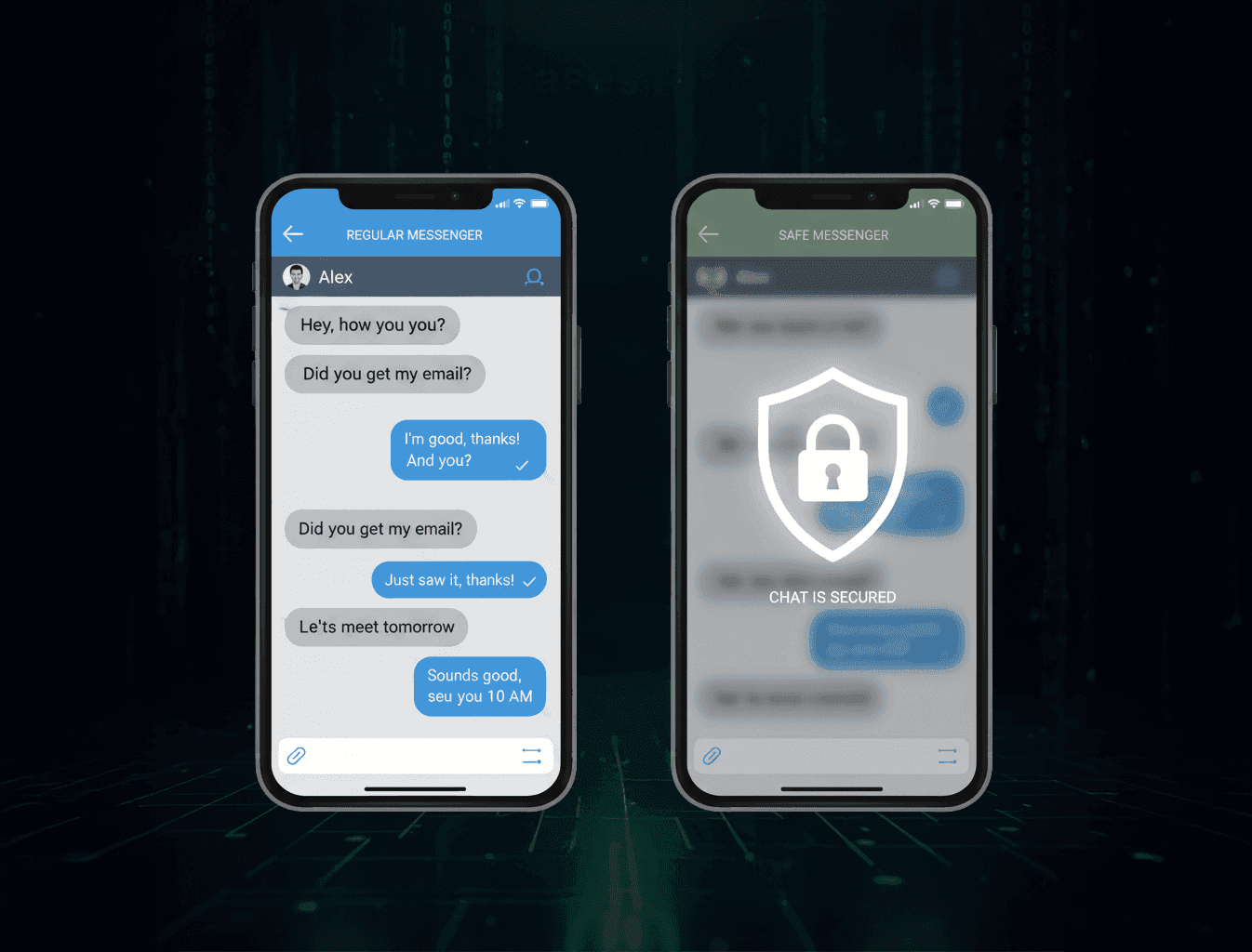
In 2025, messaging apps have become the backbone of modern communication — for teams, families, and even governments.
But the line between convenience and vulnerability is thinner than ever. Every day, people exchange contracts, family photos, ID scans, and emotional confessions in apps that were never designed to guarantee true privacy.
It’s time to ask a simple question: what makes a messenger safe?
When Privacy Becomes an Essential Part of Protection
Imagine a remote designer sending a client’s project files over chat. Or a journalist sharing interview notes with a confidential source. Even simple daily acts — sending invoices, family pictures, or health information — can reveal more about us than we intend.
These moments are when privacy isn’t just desirable — it’s essential. Once data leaves your control, it can be copied, analyzed, or stored indefinitely. Privacy today is no longer about hiding; it’s about protecting yourself and those you communicate with.
What Goes Wrong with Regular Messengers
Most mainstream messengers weren’t built with full privacy in mind. They’re optimized for convenience, speed, and engagement — not for protection. Behind the scenes, they rely on centralized servers, analytics, and cloud backups that introduce invisible risks.
Here’s what can happen:
Metadata exposure: even if messages are encrypted, apps still record who talked to whom, when, and for how long.
Cloud retention: messages and files often remain stored on company servers for syncing or backups.
Server vulnerability: centralized routing means data can, in theory, be intercepted or monitored.
Identity tracking: user accounts tied to phone numbers or emails make anonymity impossible.
Data monetization: metadata and behavioral patterns are often analyzed to improve ads or engagement algorithms.
In short: regular messengers may encrypt your words, but not your presence.
To make it clear, here’s a quick comparison:
Feature | Regular Messengers |  Safe Messengers (like EXTRA SAFE) |
|---|---|---|
Connection | Routed through company servers | Direct device-to-device (P2P) |
Identity | Linked to phone or email | Anonymous 9-digit number |
Data Storage | Cloud backups or sync | Temporary, encrypted |
Encryption | Managed by the provider | Device-only keys |
Metadata | Logged for analytics | Never generated or stored |
How Safe Messengers Actually Work
A safe messenger doesn’t rely on corporate infrastructure to protect your data — it ensures that your data never leaves your device.
EXTRA SAFE operates on a device-to-device (P2P) model, meaning every message and call travels directly between participants’ devices, bypassing servers completely.
The encryption keys are generated and stored only on the user’s device. This guarantees that even if someone accessed network traffic, the data would remain unreadable.
Once the conversation ends, all encrypted session data disappears — leaving no digital trace. This isn’t a privacy mode. It’s privacy by design.
How EXTRA SAFE Protects You
Whether you’re discussing business terms, sharing sensitive files, or simply want to stay invisible online, EXTRA SAFE gives you peace of mind.
Every call connects device-to-device (P2P) and has blockchain-level security. EXTRA SAFE uses encryption algorithms similar to those used in Ethereum network.
Let's look at a real-life scenario. For example, a lawyer and client need to review confidential documents during a video call. Instead of using a conventional messenger with cloud storage and logs, they connect via EXTRA SAFE. Their session exists only between their devices — no servers, no archives, no traces left afterward.
The experience feels like a normal call, but the protection works on a blockchain-grade level.
Why It Matters
Safe messengers like EXTRA SAFE replace trust in companies with trust in cryptography.
When privacy matters — whether for personal security, professional ethics, or peace of mind — choose communication that’s secure by architecture, not by promise.
Talk freely. Share safely. Communicate EXTRA SAFE.