July 9, 2026
Categories:
What We Learned from Phase One of the EXTRA SAFE Beta and What We're Testing Next
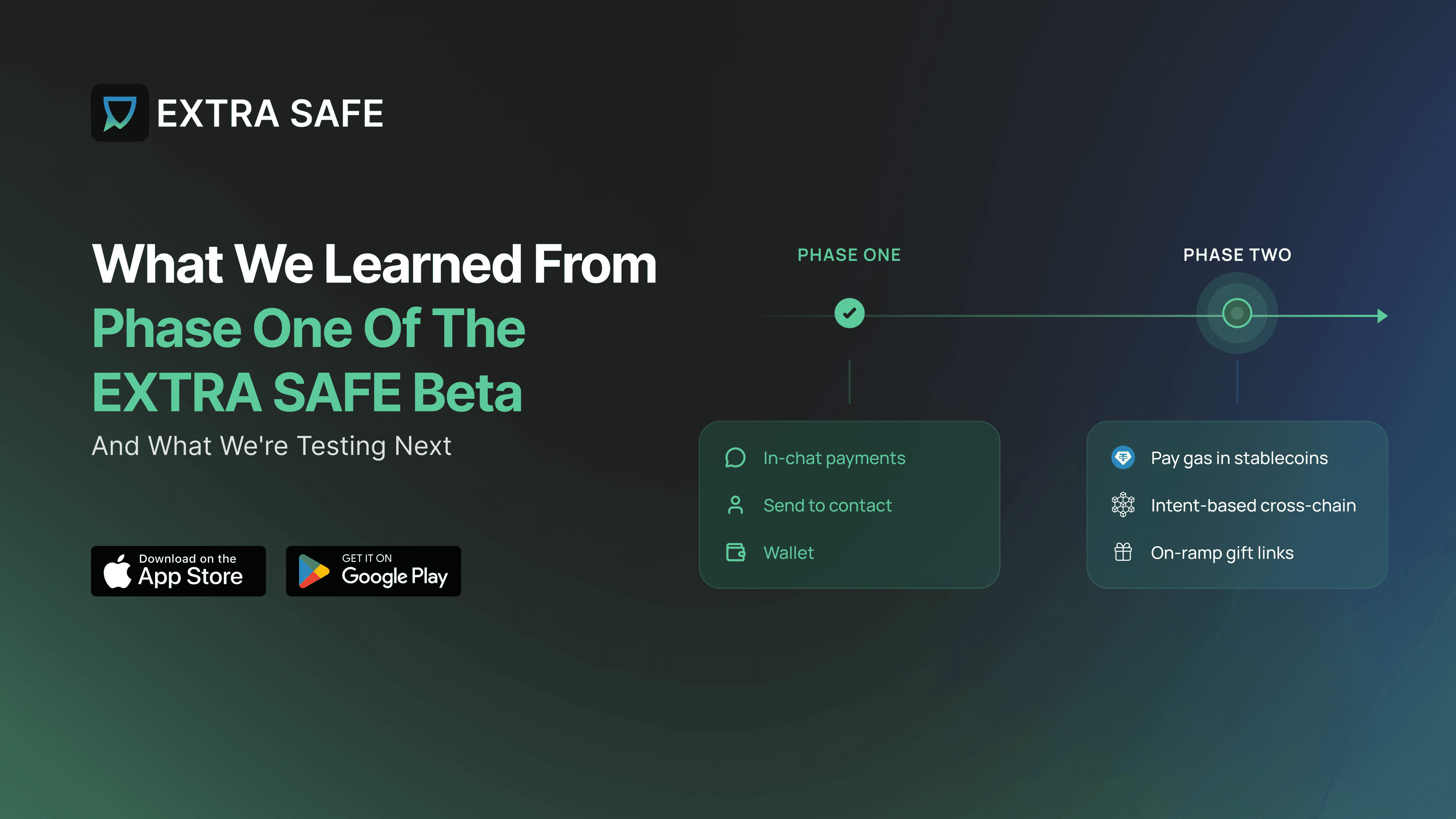
The EXTRA SAFE closed beta started in June 2026, and it runs in two phases. Phase One just wrapped — a round of live calls where testers opened the app and tested the payment flow in chat, and told us exactly what worked and what didn’t. For now, we’ve held back one of the app’s most important features: stablecoins paying their own gas fees. This feature, along with others, will be introduced in Phase Two.
Here’s what we learned from Phase One: what already works and what we’re still improving.
What Phase One Actually Covered
Phase One had one job: prove the core loop works, and sharpen how we run these calls before Phase Two brings a bigger feature set into the room.
Tested in Phase One:
- •
Transfers directly inside a chat.
- •
The self-custodial wallet — opening it, funding it, moving between chat and wallet.
- •
Sending to a contact by name, not a wallet address.
Core Flow: Sending Crypto Inside a Chat
"It was the fastest transaction that I have ever seen, actually," one already-active crypto user told us — the kind of person who trades daily and knows exactly what slow looks like. "This app has broken the normal crypto transaction sphere," he added.
A first-time tester with no crypto background at all put it simpler: "I think [in terms of] sending crypto in chat, it's the easiest, most convenient, and maybe more reliable."
The builder on our calls made the same point from the engineering side: payments built into the messenger itself beat payments bolted on through a bot — "I don’t like when everything is made via some bot" was his complaint about how others do it.
We took two main notes into Phase Two. First, identity: transfers show up tied to a number instead of a name, and one tester’s main feedback was that it’s not always clear who sent the money. Second, onboarding: the installation process still needs improvement before we can reach a wider audience. Both issues are already on our to-do-list.
Who We Talked To
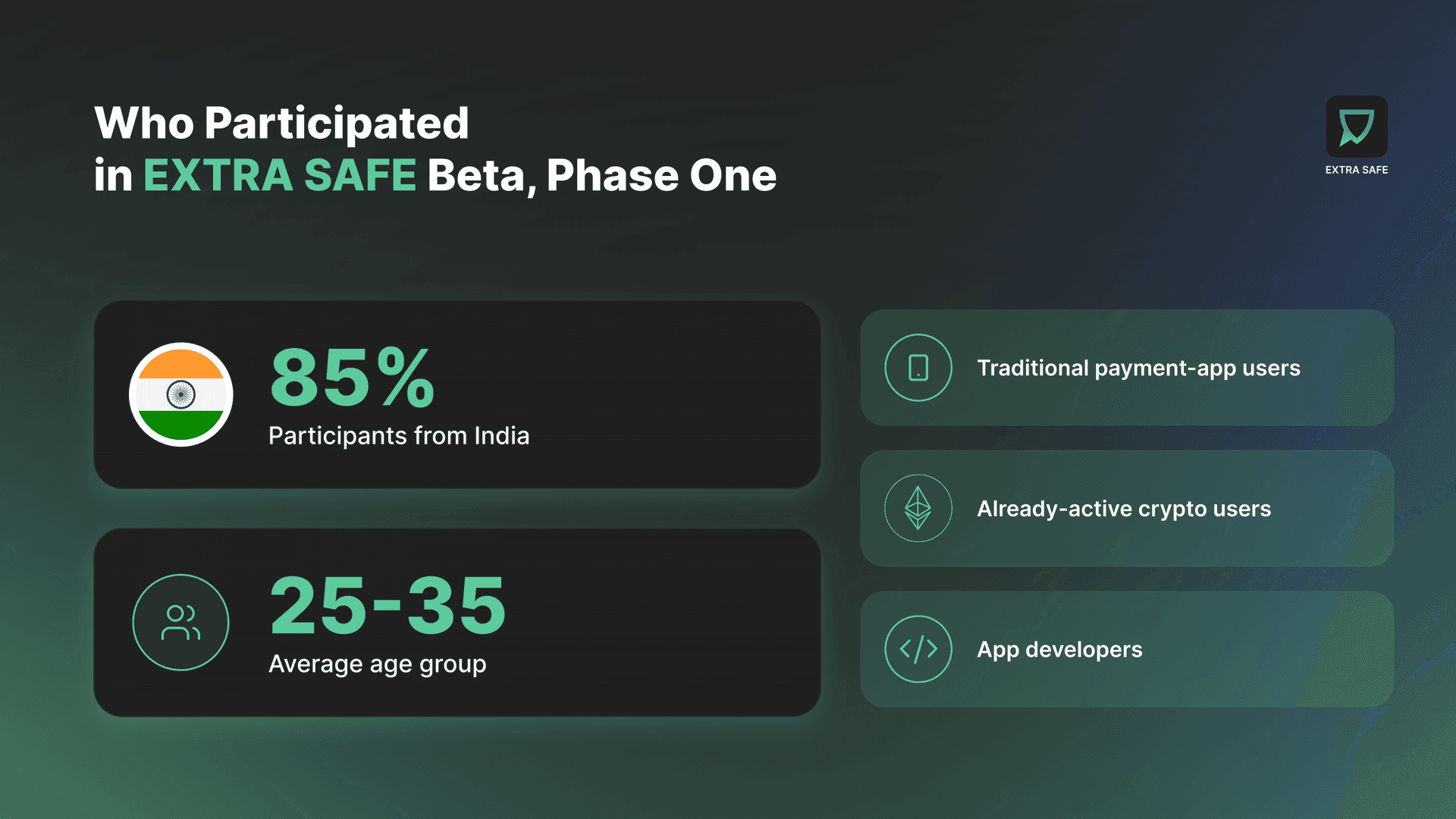
We invited people who were already using the app, as well as specialized communities in web3. Once they joined, we grouped them based on how they currently move money.
1.
Traditional payment-app users that rely on UPI, Google Pay, and PhonePe for daily transactions. But when money needs to leave the country, they face cash-conversion shops that take up to a 10% cut, stalled transfers, and client payments from abroad that sometimes never arrive.
2.
Already-active crypto users who have found their own solutions, such as using centralized exchanges and cross-border transfers. They pay for these workarounds with fees and often wait 5 to 10 minutes just to see a transfer confirmed.
3.
A builder’s perspective also came up. One tester is building his own chat-payments product. For him, this was less about market feedback and more about stress-testing the architecture, including seed phrases, identity, and sync.
Roughly 85% of the people on these calls were based in India. That's not a coincidence, as approximately 90% of our app users are from India.
What Users Consistently Love
Three things came up across almost every call, regardless of how much crypto experience someone walked in with.
1.
Simplicity. "Not complicated like other apps… simple to talk, simple to pay," said one tester — a class-12 student with zero prior exposure to crypto. "It's a very simple, simple way to send crypto and very useful thing," another call echoed. That's the payoff of putting the wallet inside the chat instead of building a separate app: there's nothing new to learn, because there's nothing new to open.
2.
Speed. "Yeah, definitely, way fast," said a tester who was completely new to the app. Transfers settle in under a second if they run on Avalanche, the default blockchain. It’s so fast that the transfer is done before you look up from the conversation.
3.
Privacy. "You can chat without a phone number. I love that," said a freelancer testing on satellite Wi-Fi with no SIM card. "When we get that temporary number, that becomes our identity." The process is simple: pick a name, get an EXTRA SAFE number, and start chatting.
Biggest bingo: every single call landed on the gasless experience as the thing they want — the pain (native coin, fees, minimums) came up unprompted from all crypto-aware users. We're building exactly the right thing.
Arriving in Phase Two
Phase Two takes the beta from the basics to the features that define EXTRA SAFE — here's what testers get their hands on next:
- •
Stablecoins paying their own gas. The fee is settled in the same token you send — a core feature enabled by UGTP, the infrastructure on which all on-chain activity in the EXTRA SAFE app is built.
- •
Intent-based cross-chain transfers, with routing powered by LiFi — you send the token you hold, and your contact receives the token they want, on the chain they want.
- •
An on-ramp gift link that creates a funded wallet for the recipient the moment they tap it.
We planned this split on purpose. Before giving testers the feature that should make on-chain actions feel seamless, we wanted to make sure the basics worked first: chat, wallet, and sending to contacts, all tested from start to finish by real EXTRA SAFE users, outside our team.
Phase One showed us that the basics work: chat, wallet, and sending to contacts. Real people made real transfers on their own once the app was open. Phase Two is where we test the bigger promise with real users for the first time.
JOIN THE BETA →