July 29, 2026
Categories:
How Private Tokens in EXTRA SAFE Protect Your Balances, Transfers, and Spending History
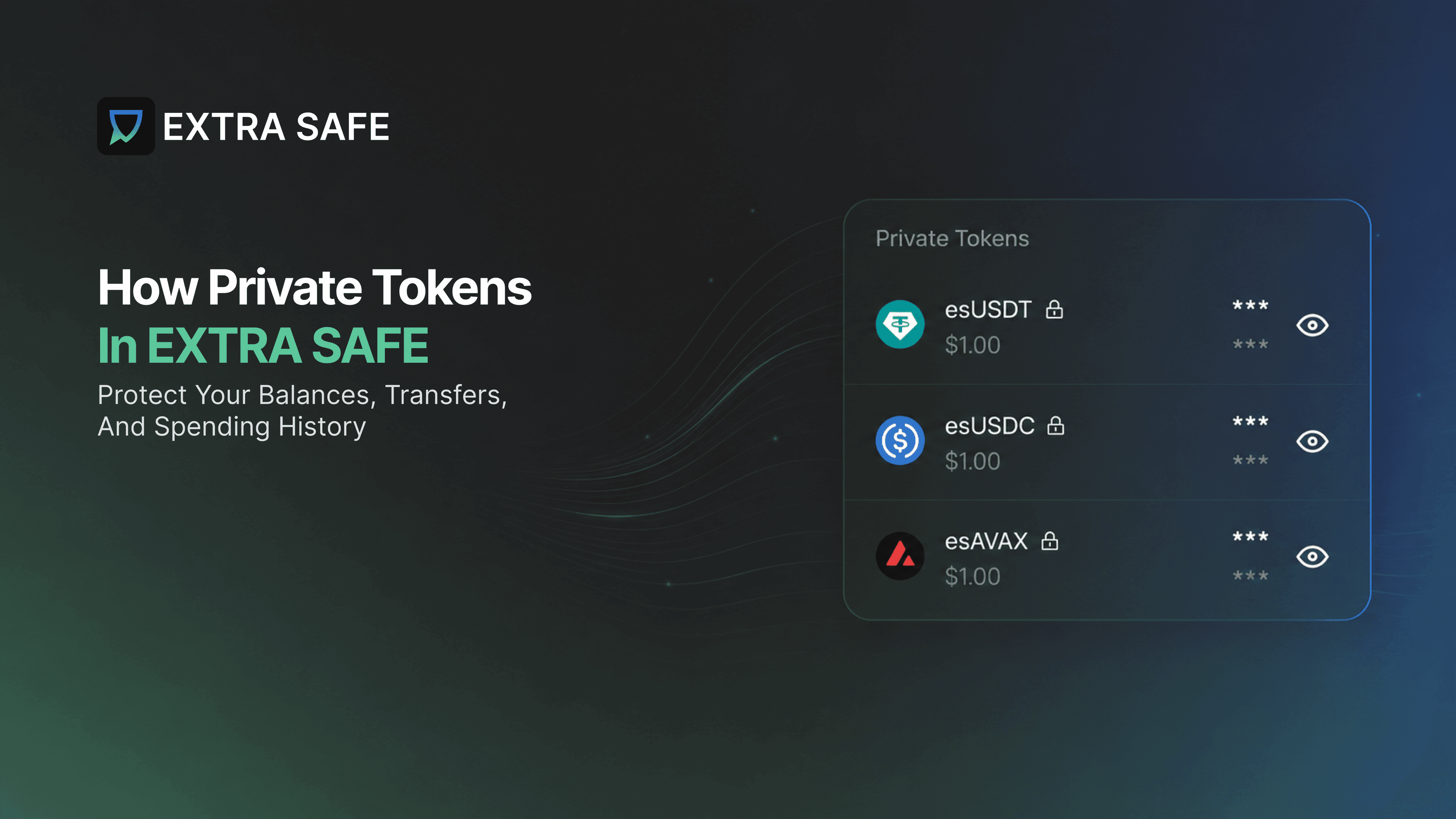
Stablecoins are no longer just for trading — they’re now being used for everyday payments. More places, like duty-free shops, lunch spots, and online stores, are starting to accept stablecoins just like they accept cards.
As stablecoins become more widely used, each payment leaves a record. This wasn’t an issue when stablecoins mostly moved between wallets, but it changes once you start using them at the checkout. Not everyone needs to see what you paid and how much is left in your wallet. Here’s how EXTRA SAFE makes sure they can’t.
Private Tokens is the feature currently in development. This post gives you a glimpse into how it will work once it ships with our next major release.
Your Balance Doesn’t Have to Be Part of the Transaction
Elena is at a duty-free counter, paying for a bottle of perfume with stablecoins sent directly from her wallet to the store’s wallet. The payment is instant, just like tapping a card. But here’s what’s different: after the payment, the merchant or anyone else who wants to look now has her wallet address. Once that address is public, it stays that way. Every balance she’s held and every payment she’s made or received is visible on a block explorer, and anyone with a few minutes can look it up.
Someone new to stablecoins doesn’t expect this. Card payments have never worked this way, so it’s surprising. People who have used crypto for years already know about this issue, and they’ve just learned to live with it instead of seeing it fixed. But now, there’s a solution to this everlasting pain.
What Private Tokens in EXTRA SAFE Are Built On
We chose Avalanche's eERC standard to implement private tokens in EXTRA SAFE. Avalanche is already the default blockchain behind transfers in EXTRA SAFE, and eERC, Avalanche's encrypted token standard, is the next step in that partnership.
Unlike standard tokens, where every balance and transaction amount is visible on the public blockchain, eERC is designed so your token balances and transaction amounts are encrypted. This means that even though transactions are validated by the network, outside observers cannot see how much you sent, received, or hold in your wallet. Only you can view your own private financial data, giving you a level of privacy standard tokens cannot match.
Here's what eERC actually is: a version of a token built so the network can confirm a transaction happened. The math checks out, without showing anyone the amount attached to it — you can read Avalanche's own explainer on what kind of privacy eERC provides to learn more.
Applied to a payment like Elena's, eERC hides two things:
Your balance. The amount in your private tokens is encrypted on the blockchain, and only you can see it.
Your transfer amount. Anyone watching the chain can tell a transfer happened. However, they can't tell how much moved.
There are two more reasons why eERC is the right choice, especially for a wallet that already holds regular tokens. Private tokens appear alongside stablecoins and other tokens in your wallet, and you don’t need to change anything else to use them. They work on your phone, transfer at the same speed as your other tokens, and cost the same whether your balance is private or public.
The standard also includes an Auditability Module — built to reveal a specific transaction without exposing anything else, and without redeploying the contract. It's a middle ground between full transparency and total opacity, built into eERC itself.
How to Use Private Tokens in the App
To get Private Tokens in your wallet in EXTRA SAFE, open the Private Tokens section in your asset list and tap the one you want, like esUSDC. On its page, tap Deposit to convert the matching public token into its Private Token version, moving that amount into your hidden balance. Withdrawal works the same way in reverse, letting you convert back to the public token if you need to spend it somewhere that doesn’t support Private Tokens yet. Both actions only need one signature to confirm.
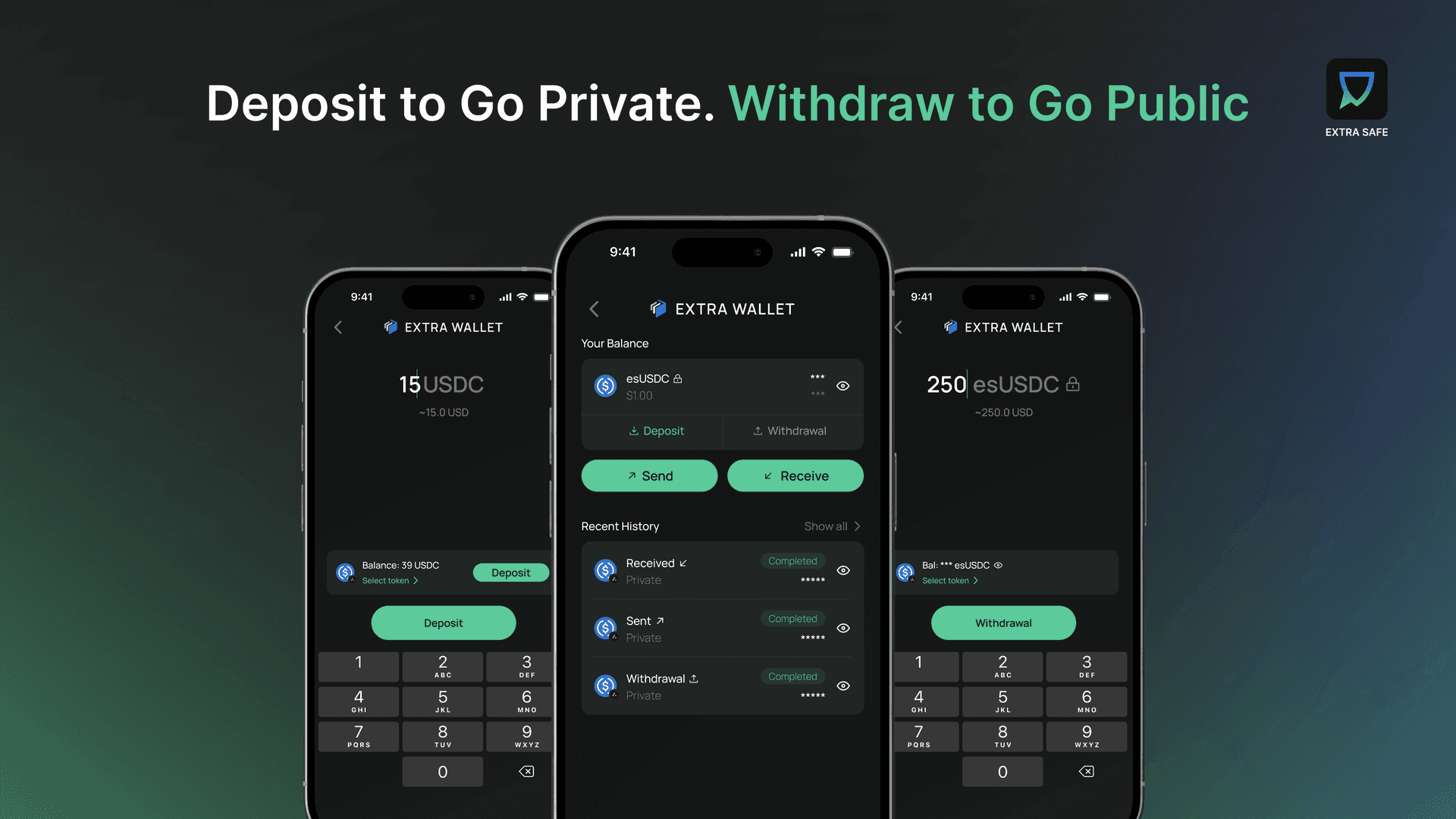
You can send and receive Private Tokens in chat just like you do with anything else in EXTRA SAFE. Open the chat, pick the token from your list, and send it. Every Private Token sent or received appears in the chat, with the amount hidden by default. Tap to reveal it or open the full transaction details whenever you want.
Compliance Leaders Are Already Betting on Privacy
This year showed that privacy without a path to compliance doesn't hold up in the real world. Starknet's STRK20 standard brought shielded balances and transfers to ERC-20 tokens, with disclosure available to regulators when legally required.
Months later, Starknet extended that same privacy layer to USDC itself — letting the world's most compliance-focused stablecoin move privately on-chain. Privacy and compliance are no longer opposites. The industry's biggest players are already building for both.
Not everyone needs to see what you paid. This is how we make sure of it.
Private tokens will arrive in EXTRA SAFE as part of our major releases this August. The closed beta continues.
JOIN NOW →