October 16, 2026
Categories:
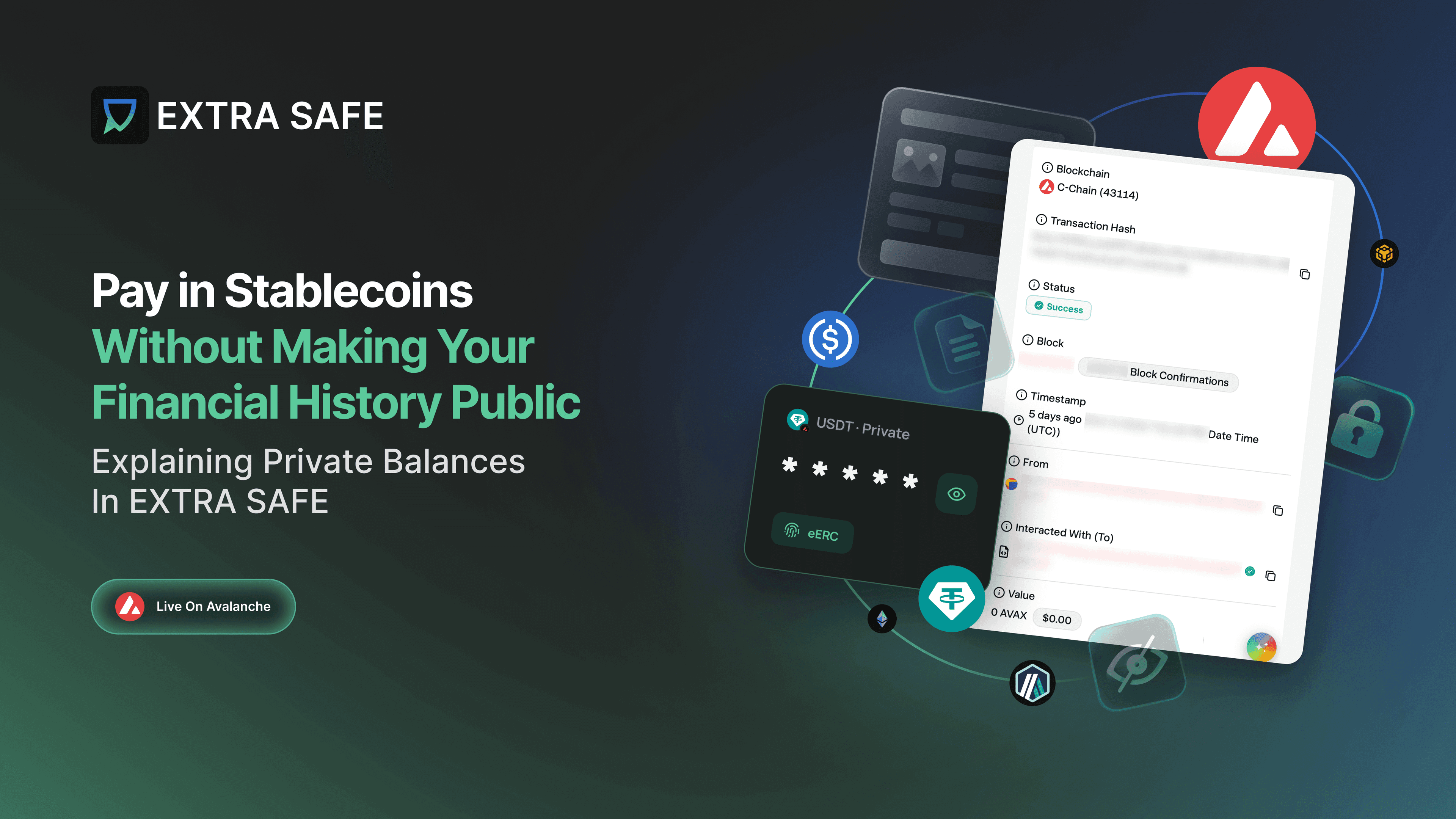
Pay in Stablecoins Without Making Your Financial History Public: Explaining Private Balances
A barista scans a QR code, and $4.50 in USDC goes straight to the shop’s wallet. The payment is instant, just like tapping your card. But with stablecoins, the process doesn’t stop there.
Now the shop has a wallet address, and anyone can look it up. If you paste that address into a block explorer, you’ll see its full history: every balance, every payment sent or received, right from the start. Buying one coffee can reveal someone’s whole financial story.
Now picture the same payment again, sent privately, hidden from the public. The block explorer still confirms the transfer and shows who sent and received it, but the amount is no longer visible.
That’s private balances and transfer amounts — hidden from public view (not from oversight), available to every EXTRA SAFE user on every stablecoin the wallet supports. It doesn’t mix or obscure who’s sending or receiving — only the amount disappears. Here’s how it actually works, the problem it closes, and a risk most people moving into stablecoin payments right now don’t even know exists.
The Real Cost of a Transparent Wallet
When you send money through a bank or a fiat app, only the recipient sees it land. That’s already the standard for ordinary money. Public blockchains weren’t designed for daily payments, and there’s a clear gap. An address isn’t a name, so people often think blockchains are private. But pseudonymous doesn’t mean private — once someone knows an address, all its balances and transfers stay visible to anyone, forever.
This lack of privacy has already led to real problems. In 2019 and 2020, several crypto holders received extortion emails listing their exact wallet balances — details available only on the blockchain. Security researcher Jameson Lopp tracks over 100 physical attacks on crypto holders, and many victims think they were targeted because their wealth was visible on-chain. Businesses face a similar issue: if a company holds stablecoins as working capital, competitors can see every vendor payment and deal size.
Long-time crypto users know about this trade-off, even if they don’t like it. But the fastest-growing group using stablecoins isn’t crypto experts — it’s everyday people accepting USDT or USDC for sales, services, or paychecks, just like they would with a card. Most don’t realize how much information a single payment can reveal, because nothing in the process warns them.
What Private Balances in EXTRA SAFE Actually Hide
Private Balances run on eERC, Avalanche’s encrypted standard, and work on its C-Chain. They are already available in the EXTRA SAFE wallet for every stablecoin on Avalanche.
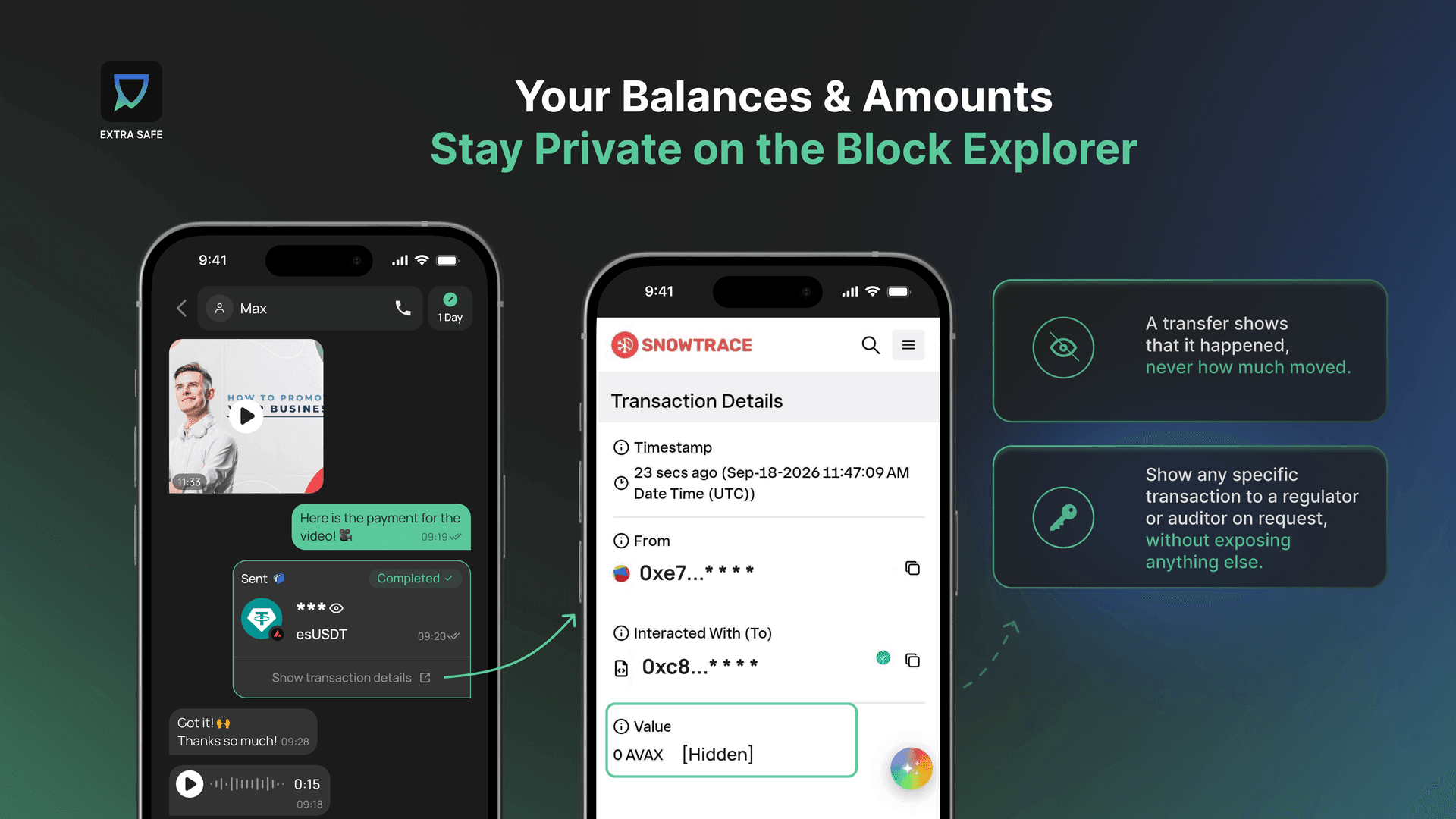
When you convert a stablecoin to a Private Balance in the EXTRA SAFE wallet, the balance is fully encrypted on-chain. Only you, or anyone you choose to share it with, can see the real number, with disclosure still available through the Auditability Module, covered next. A Private Balance transfer from EXTRA SAFE works the same way. If you open SnowTrace, Avalanche's block explorer, the transfer appears as confirmed, but the amount remains hidden. Zero-knowledge proofs allow the network to confirm the transaction is valid without revealing what was sent.
eERC also includes a built-in Auditability Module, which EXTRA SAFE uses as well. It can decrypt a specific transaction for someone who is authorized to see it, without exposing anything else your wallet has done. That access can be revoked or changed without redeploying anything. eERC keeps balances and payments private, while still allowing them to be proven to anyone who is entitled to check. It’s privacy, not a mixer: who sent to whom is never hidden, only how much.
You Don't Need a New Asset to Use This
Converting a stablecoin on Avalanche into a Private Balance wraps it into its encrypted form — that’s what eERC’s Converter Mode does. Reversing it is just as easy: unwrap it whenever you need to spend it somewhere that doesn’t yet support Private Balances.
The stablecoin itself does not change. There is no new custodian, no separate balance, and nothing about the EXTRA SAFE wallet changes when a balance goes private. You are still sending and receiving the same stablecoins, but now you have the option to keep the amount private.
Who Private Balances Are For
Running payroll in stablecoins puts an entire company’s salary structure on a public ledger — employees comparing notes, competitors estimating headcount costs, anyone who looks. Private Balances closes that gap for a business the same way it does for a person.
But most people reach for it for a simpler reason: they just want their stablecoin transfers to stay as private as a transfer already is everywhere else — a bank transfer, a fiat app, any ordinary way of sending money. Private balances brings stablecoins up to that same standard.
Private, and Still Provable
In the past, privacy and compliance were seen as opposites in crypto. That is no longer the case.
eERC's Auditability Module is Avalanche's answer: access that can reveal one transaction to an authorized party without opening the rest of the wallet. Avalanche isn't the only network building this way, either. On June 9, 2026, Starknet launched STRK20, a protocol-level privacy framework for its network, and on June 25 — two weeks later — it extended that same shielded-balance treatment to USDC itself. USDC is a stablecoin millions of people already use every day, and it now has an option to move privately on-chain too.
The direction is the same across the industry: privacy built into the stablecoin itself, with disclosure available to whoever is actually entitled to it. Private Balances is EXTRA SAFE's version of that same idea, live today on Avalanche.
Try It Today
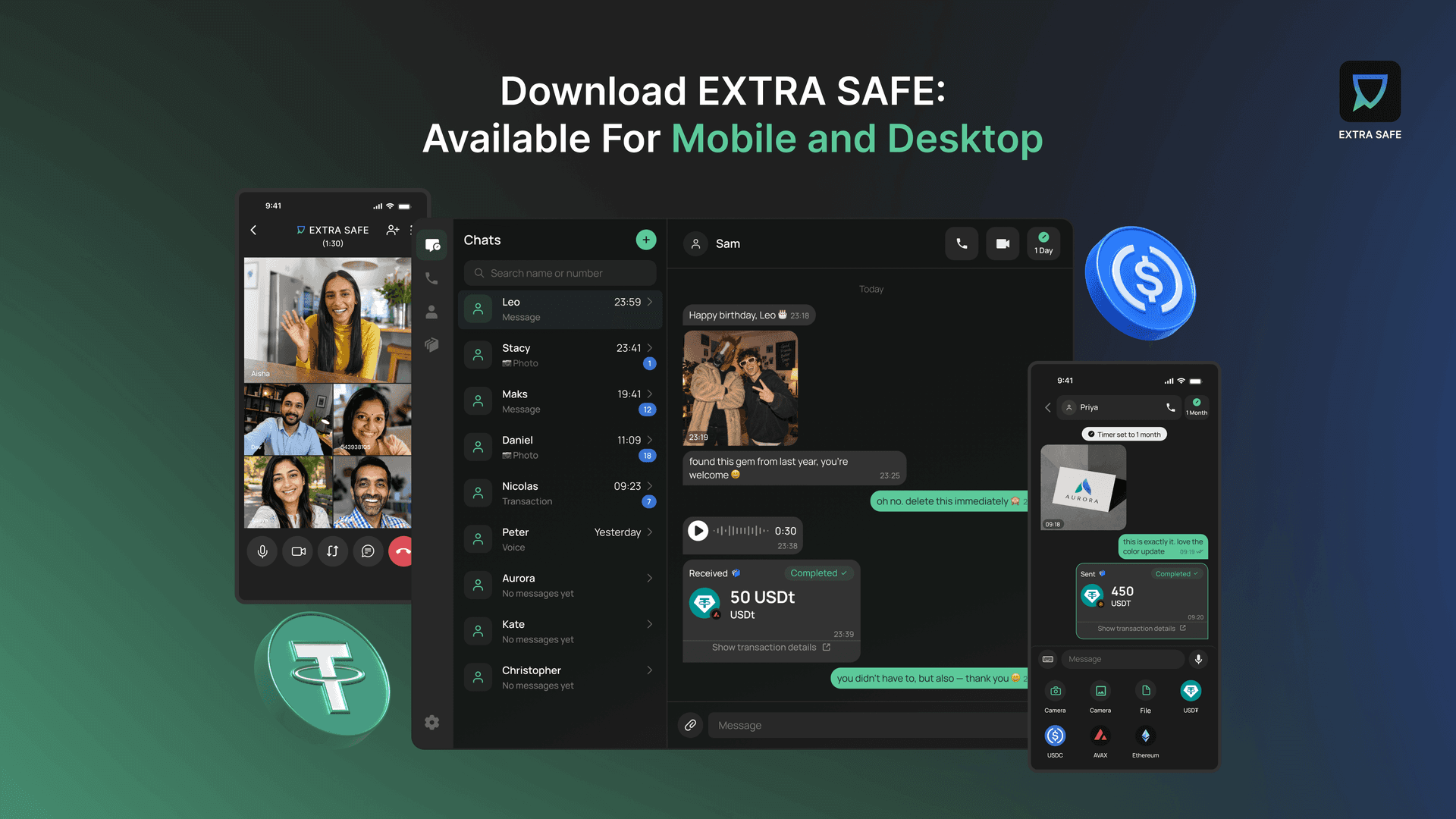
Not everyone needs to see what you paid. EXTRA SAFE makes sure of it. Private Balances are live now on Avalanche.
Note: Swaps aren’t currently available on iOS.