October 8, 2026
Categories:
How EXTRA SAFE Removes Wallet Addresses From Everyday Stablecoin Payments
You know exactly who you want to pay. Maybe it's a friend you owe for a trip, a family member who needs money, or someone you've been talking to for the past twenty minutes.
They’re already in your contacts, and you might be looking at their messages right now. But to send them USDC or USDT, you have to stop thinking about the person and start thinking about something like this:
0x71C...92F
You copy the wallet address, switch apps, paste it, check the network, compare the first and last few characters, double-check, and then send.
Stablecoins have become a practical way to send money. In 2025, people sent about $390 billion in stablecoin payments, more than double the previous year. Around $77 billion of that was person-to-person transfers. But sending stablecoins still relies on something challenging for people: the wallet address.
EXTRA SAFE changes this. Now, instead of copy-pasting an address, you just choose the person you’re already chatting with.
The Problem With Paying by Wallet Address
Paying an address instead of a person creates friction first, then human error, then an opportunity for someone else. The friction is the address itself: unreadable, unmemorable, long enough that most people check only a handful of characters before hitting send. So attackers built an exploit around exactly that habit. Security researchers call it address poisoning, and it’s not rare.
Carnegie Mellon University's CyLab looked at two years of data from Ethereum and Binance Smart Chain and found about 270 million attack attempts on 17 million wallets. That’s around 16 attempts per targeted address. Confirmed losses were at least $83.8 million between July 2022 and June 2024, or about $115,000 lost every day for two years.
The process is simple. An attacker creates a lookalike address with the same first and last few characters as one the victim uses. They send a small or zero-value transaction from it, so it shows up in the victim’s transaction history. Chainalysis has seen this happen in thousands of wallets: later, the victim copies what looks like the right address from their history, since most apps cut off the middle and people rarely check beyond the ends.
Even careful habits aren’t always enough. In December 2025, a trader withdrew funds and, as usual, sent a small test transaction first. Thirty minutes later, the trader sent the remaining 49,999,950 USDT — about $50 million — to what seemed like the same address. But it wasn’t. The attacker had placed a lookalike address in the trader’s history, matching the first five and last four characters, and the big transfer went there. The trader even offered a $1 million bounty to recover some of the funds, writes The Block.
Still, the problem hasn't slowed down. Bitquery's tracking of Ethereum wallets over the most recent twelve months counted close to 6.9 million Ethereum wallets targeted and $22.3 million in confirmed losses. This is an ongoing cost of paying by address, not just something from the past.
The Fix: Send Stablecoins to a Contact, Not an Address
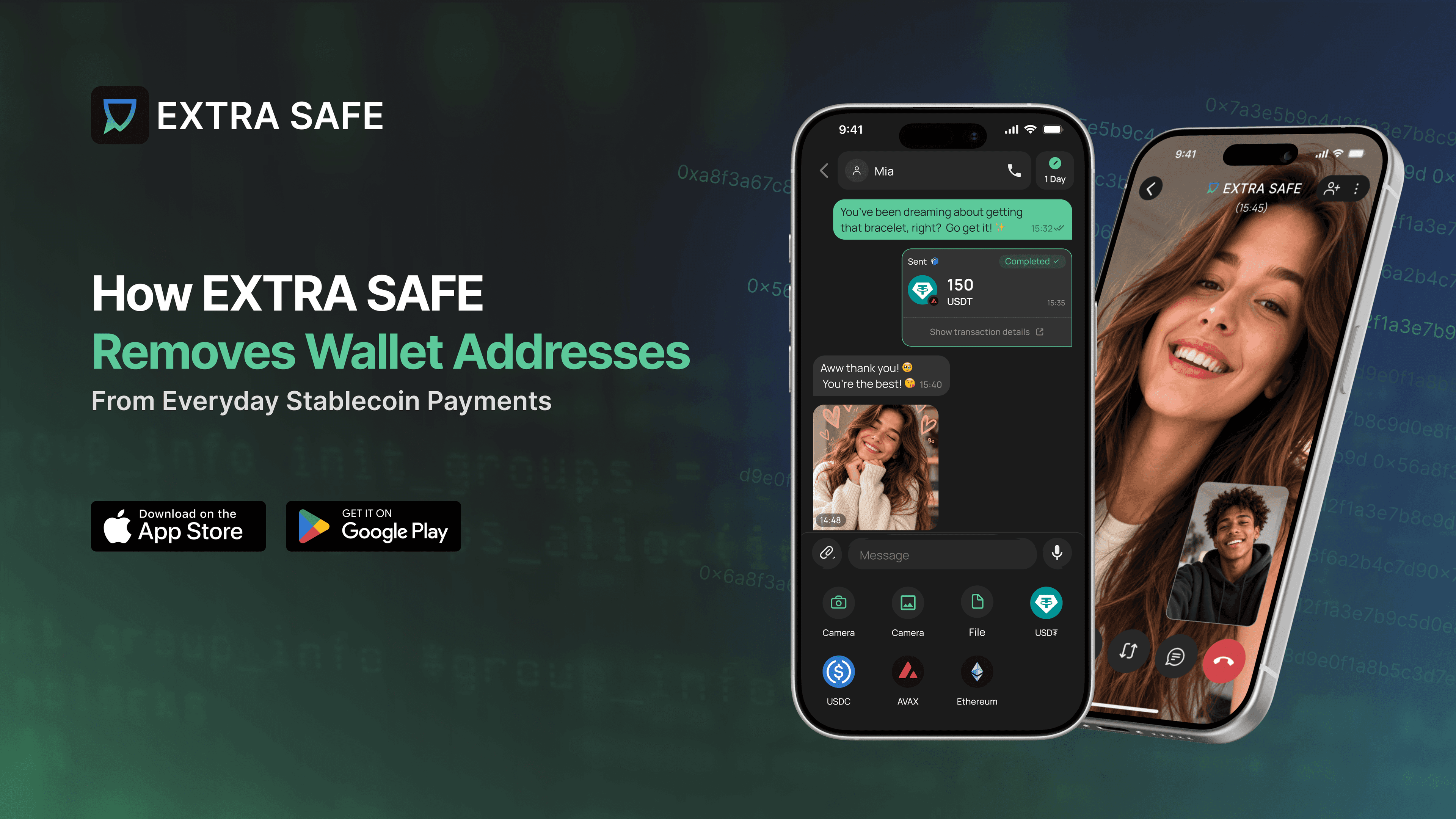
EXTRA SAFE takes a different approach: what if you never had to deal with the address at all? The person you want to pay is already in your chat, so EXTRA SAFE lets you keep it that simple. To send USDT or USDC, just open the chat, tap the attachment icon, pick the stablecoin and amount, and send — just like sending a photo or voice note.
The transfer still goes from wallet to wallet. EXTRA SAFE is a self-custodial messenger, so every transfer sends your stablecoins straight to the other person’s wallet. The difference is, you don’t have to think about the address anymore. You pick the person, and EXTRA SAFE takes care of the rest.
Verify the Person With a Call Before You Send
EXTRA SAFE adds a layer no wallet interface can offer on its own: calls, in the same chat as the transfer. If you’re sending 150 USDC to a brother, a contractor, or a friend abroad, you can start a video or audio call from the same screen before you send.
A call doesn’t prove who owns a wallet in a technical sense. But it lets you say a quick hello before sending — thirty seconds to catch up, see the person’s face, and know exactly who will get your stablecoins.
Track the Send and Skip the Gas Token
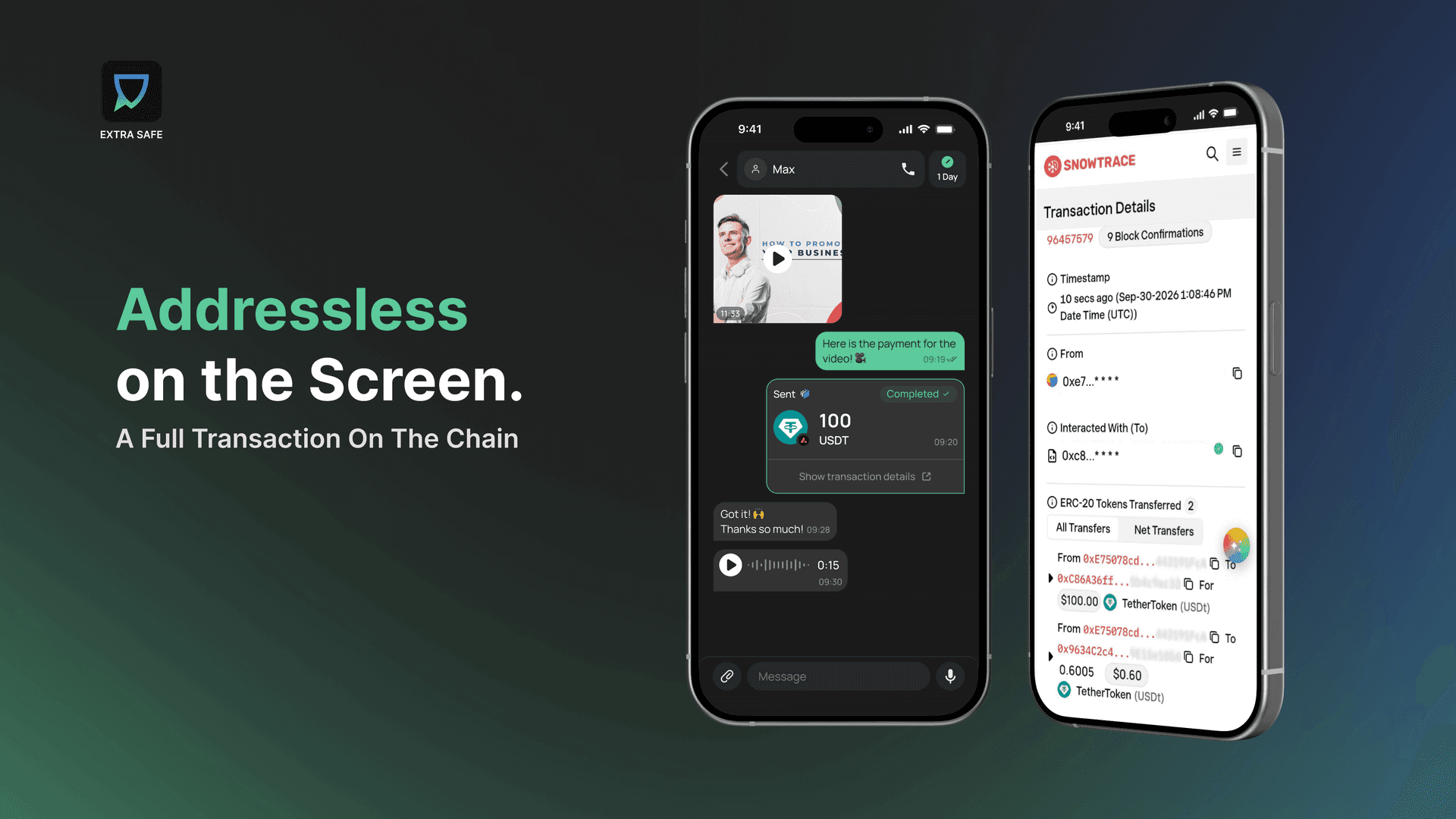
After you make the transaction, all the details stay in the same chat. The status updates right there, from sent to completed, so you just check the conversation instead of switching to another app.
The fee works the same way. Gas is paid with the stablecoins you’re already sending — no need for a separate native token. Sending 200 USDC to a friend is as simple as it sounds: open the chat, pick the stablecoin from the attachment menu, and send.
Addressless Doesn't Mean Walletless: The Blockchain Part Still Happens
None of this changes what's actually happening on-chain. Funds still move wallet-to-wallet. The recipient still controls their own wallet, as with any self-custodial wallet. A real blockchain transaction still settles on one of six supported networks.
What EXTRA SAFE removes is the manual work that sits between a sender's intent and the transaction: finding the recipient's address, copying it, pasting it, and checking it against the same handful of characters an attacker already knows how to fake.
The Takeaway: Send Stablecoins to People, Not Addresses
Stablecoins already move at the scale of a real payment network. What's held them back from feeling like one is the interface standing between a sender and the person they're paying, not the technology moving the funds.
The fix isn't a more careful copy-paste. It's a different question: not "what's your address," but "who am I sending this to?"
Send stablecoins to people, not addresses.