January 9, 2026
Not All Private Chat Apps Are the Same: How "Built-In" Privacy Differs From "Bolted-On"
What if the apps you trust today could quietly “read” your messages? Maybe not today, but tomorrow, under a different set of policies?
Most chat apps can technically impersonate users, access encryption keys, or piece together parts of your communication history – even if they promise they won't. That reality sounds unsettling, but it isn't a threat – it's simply the consequence of how most messaging platforms are built.
If you look closer, most modern chat apps usually have:
deep access to your device environment,
centralized account systems tied to phone numbers or emails,
server-side control over message routing and metadata,
unclear or inconsistent rules for keeping chat history, which can change over time.
These design choices are meant to make apps easier to use. They help you find contacts, sign up quickly, and keep conversations going across devices. But this convenience also brings additional privacy risks, since it often means greater access and longer data retention.
In many cases, platforms can access more than users expect. Not because they have malicious intent, but because their architecture allows it. And when an app is built around long-term user accounts, analytics, or future monetization strategies, retaining data becomes a “property” that grows stronger over time.
That’s why it’s important to understand how chat apps are built. Privacy and security aren’t just about what an app says – it’s about what it can actually do if things change.
Why Built-In Data Limits Matter in Messengers
Most privacy policies use phrases like "we don't access your data" or "we respect your privacy." But for you as a user, there’s a more important question: Can the platform access it if circumstances shift overnight?
In this context, governance is a technical fact that ensures your messaging app cannot:
impersonate you,
access or re-sign messages,
change retention behavior retroactively,
comply with legal requests simply because the data exists somewhere in its systems.
Some systems are built so the platform could do these things, but chooses not to. Others are built so the platform simply cannot, even if things change or pressure increases.
This is the key difference between built-in privacy and privacy features that only rely on trust.
Governance by design isn’t just a theory. It already exists in systems where the architecture limits control, and you can see it in real products.
Products That Limit Control by Default
1.
End-to-end encrypted messengers with local key ownership. In apps like EXTRA SAFE, Signal, or Wire, encryption keys are created and kept only on user devices, so server-side access or impersonation is technically impossible, not just unlikely.
2.
Hardware wallets and self-custody crypto tools. Systems like Ledger, Trezor, or Coldcard are built so that the provider cannot access funds, reverse transactions, or act on behalf of the user, even under legal pressure or in the face of an internal problem.
3.
Zero-knowledge storage and password managers. These services (1Password, Proton Pass, etc.) never see user passwords or files in plain text because everything is encrypted on your device before it is sent to the server.
4.
Decentralized identity and authentication systems. Here, your identity is a cryptographic proof, not an account managed by a central authority that could go away. Examples include WebAuthn/FIDO2, where authentication is based on device-held cryptographic keys rather than passwords; SSH key-based access, which has long been used in infrastructure security without central identity providers; and decentralized identity frameworks such as Sovrin or Polygon ID, where identity persists independently of any single platform.
All these systems have one thing in common: they don’t depend on restraint or good intentions, which can change. Instead, they use technical limits that stay strong no matter what happens.
That’s the difference between privacy features that can change with a policy update and governance that is built into the system itself.
Four Design Choices That Define Who's in Charge of Data
Every privacy claim is shaped by a few key design choices. These four are the most important when privacy really matters.
1. Identity: Accounts vs. Cryptographic Identities
Most chat apps use personal accounts like phone numbers, emails, or usernames, which are stored and checked by the platform. This choice leads to:
an identity database that links you to your activity,
account recovery mechanisms that require trust,
a clear connection between your conversations and your real-world identity.
Cryptographic identity is different. Your identity is a key pair created on your device. The platform doesn’t register or check who you are – it only sees proof that the same device is being used over time.
2. Keys: Server-Held vs. Device-Held
In many messaging systems, servers help create, store, or recover keys. This means users have to trust the platform not to misuse that access, even if things change.
When keys are created and kept only on user devices, the balance of power changes:
the platform cannot decrypt messages that pass through its systems,
cannot impersonate users even under pressure,
cannot sign actions on their behalf, regardless of external demands.
3. Data Flow: Centralized vs. Peer-to-Peer
With centralized routing, messages, calls, or media go through platform servers. Sometimes this is brief, but at other times logs accumulate.
Peer-to-peer communication connects devices directly. Servers help establish the connection but don’t handle the content. This choice decides if conversations can ever be stored in one place and become vulnerable.
4. Retention: Accumulation vs. Automatic Deletion
Many apps keep communication data just in case – for syncing, analytics, moderation, or features that might be added later.
Automatic deletion changes this approach completely:
messages expire by default,
call data isn't archived in distant servers,
no long-term history builds up in storage systems.
If data doesn't accumulate, it can't be repurposed when priorities shift.
The Risks of Excessive Platform Control
When platforms keep control, several risks can happen. For example, consider an anonymous journalist whose work depended on confidentiality. When their communication metadata was exposed, it revealed their sources, leading to severe consequences. Such stories transform abstract risk into immediate empathy and motivate others to act.
Unfortunately, this is just one of many examples of how the abuse of power over user data can turn into a serious problem, stemming from:
Impersonation risk. If a platform can send or relay messages on behalf of a user, impersonation is possible in the event of a breach, insider misuse, or a system compromise.
Retroactive access. Stored metadata, backups, or logs can later be used to piece together relationships, timing, and behavior patterns, even if the message content appears encrypted.
Legal and coercive pressure. If data is accessible, platforms can be forced to give it to authorities. Courts and agencies only ask for what can actually be produced, not for the impossible.
None of these risks needs broken encryption to happen. They exist because of retained control that seemed harmless until things changed.
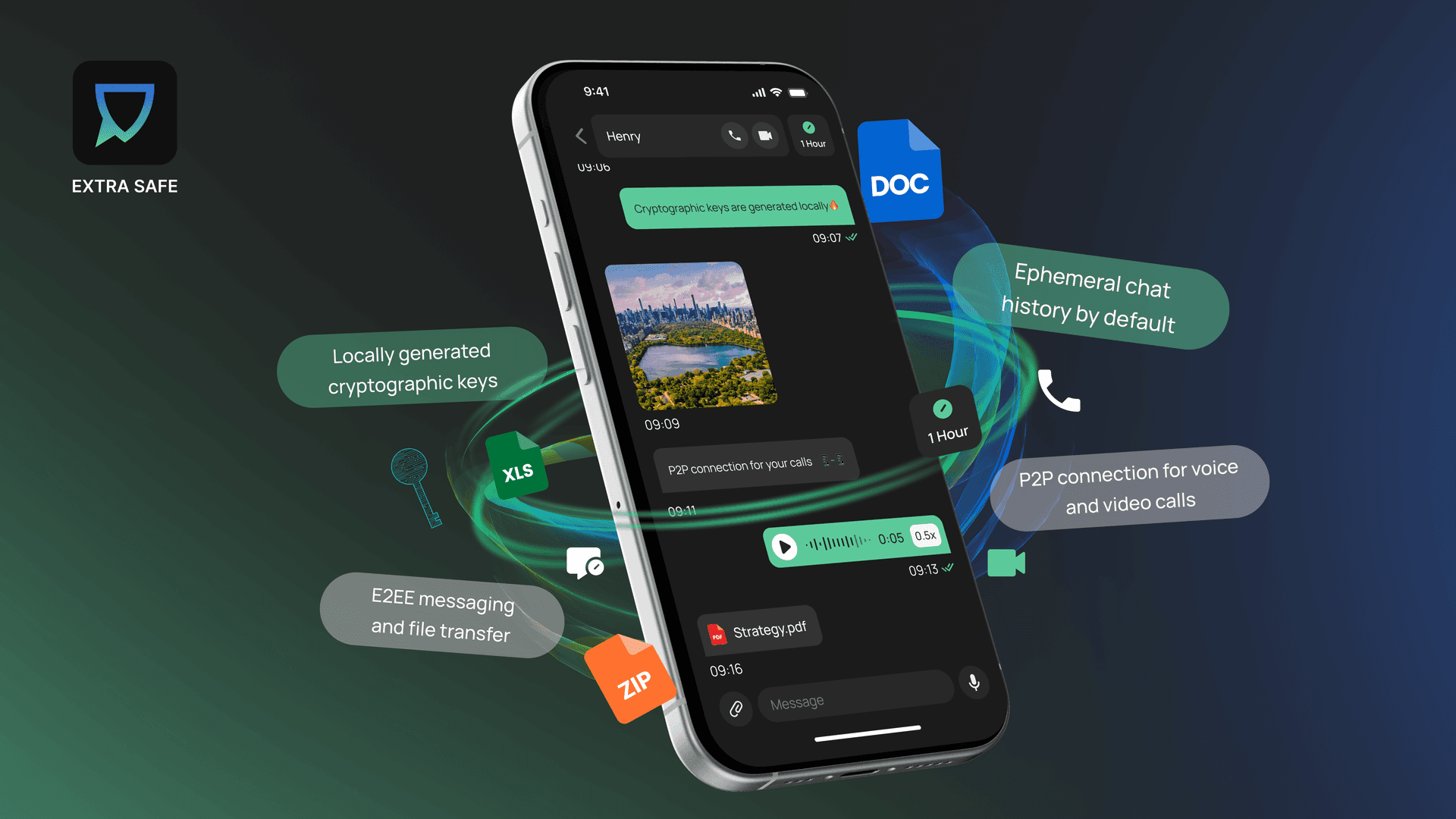
How EXTRA SAFE Is Built on Governance by Design
EXTRA SAFE takes a different approach by removing whole areas of platform control that could be misused.
Cryptographic keys are created and kept on user devices, so they never leave your control. EXTRA SAFE does not create, store, or hold private keys that could be at risk. These keys secure your call and chat sessions.
Users don’t have to trust the platform with their private messages. We cannot read messages, impersonate users, or act on their behalf – we simply can’t. Data storage is always encrypted, minimal, and temporary by default, as all chats are auto-cleared after your timer.
Calls connect devices directly, bypassing central storage. This means there is no central place where conversations build up and become vulnerable.
If you want more technical details, you can read the full Privacy & Governance by Design document. It explains how these limits are enforced at the system level and cannot be easily changed.
How This Architecture Protects Users Over Time
Architecture lasts longer than policies, leadership, or business models. A system built without central control:
reduces the risk of future misuse when priorities change,
limits damage from breaches that inevitably occur,
keeps protecting users even as leadership, rules, or business models change significantly over time.
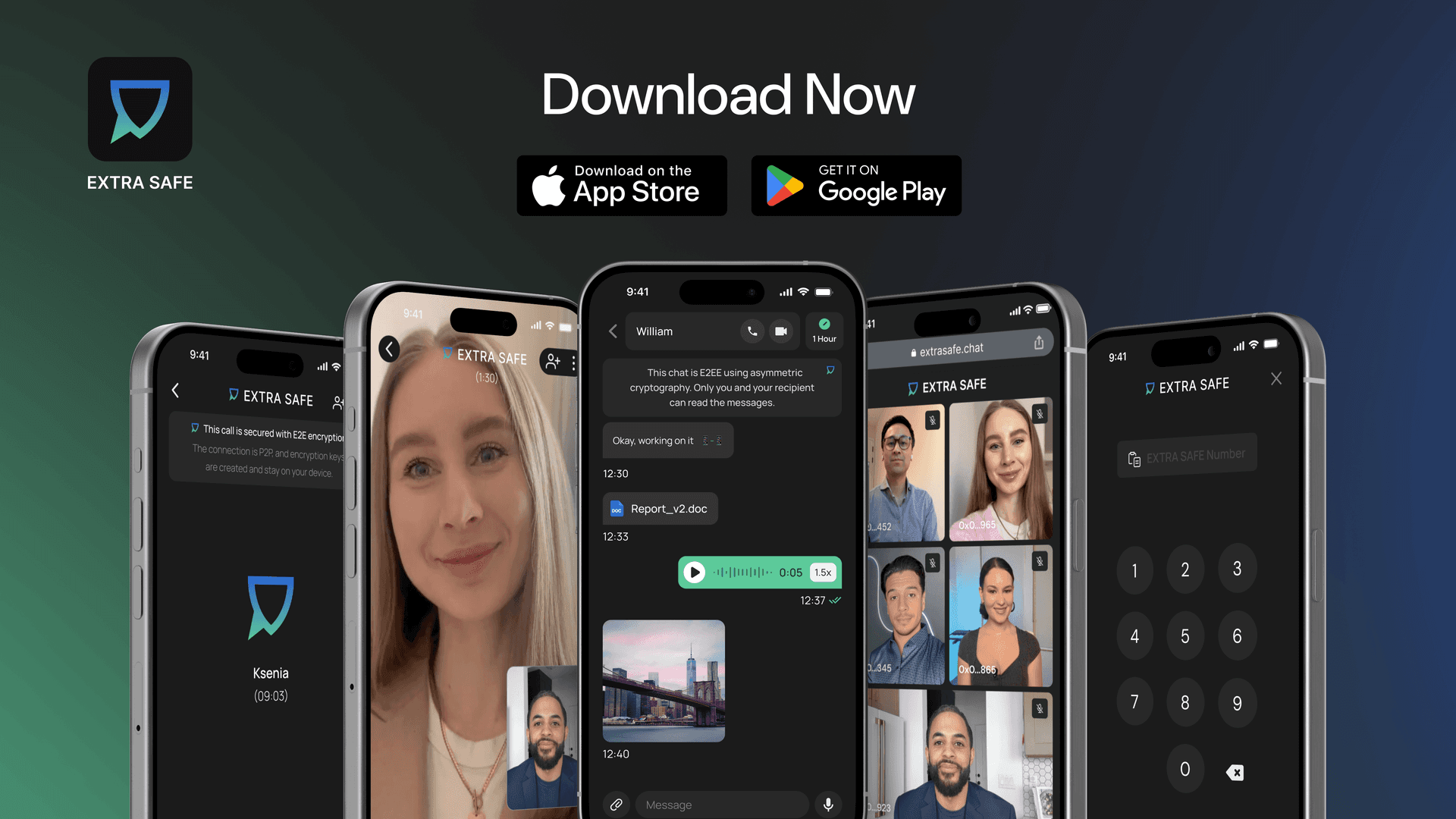
If you want a messaging app with privacy built in from the start, try EXTRA SAFE and see how governance by design works when it matters most.
Try it directly from your browser at extrasafe.chat
Prefer mobile? Download the EXTRA SAFE app for iOS and Android.