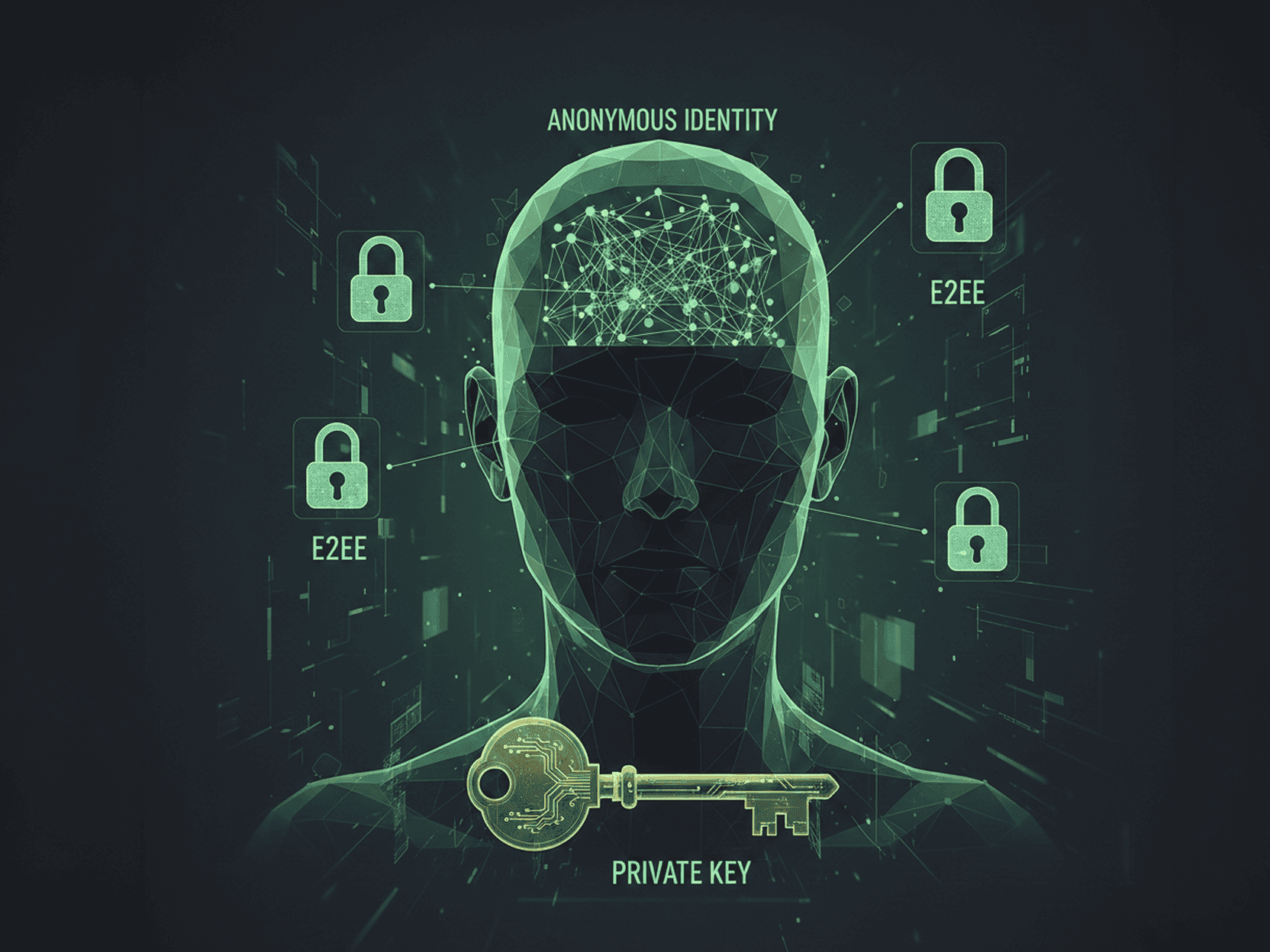
“End-to-end encrypted” does not automatically mean fully private. True communication privacy depends on how identity is created, how metadata is handled, and whether the system relies on centralized infrastructure.
Web3 messengers aim to reduce data exposure by using cryptographic keys, decentralized routing, and wallet-based identity models. But their approaches differ significantly.
This article compares the privacy architectures of leading Web3 messenger services — and explains when those differences truly matter.
What Is a Web3 Messenger?
A Web3 messenger is a communication app built on decentralized principles. Instead of relying on centralized accounts (phone numbers, emails, cloud-stored identities), these services typically use cryptographic keys, blockchain-based identity layers, or peer-to-peer (P2P) networking.
In traditional messaging apps, identity and metadata are often stored on centralized servers. Web3 messengers aim to minimize or eliminate this dependency. The goal is simple: reduce data exposure, increase user control, and strengthen cryptographic guarantees.
Well-known examples in this space include:
While not all of them are strictly “Web3-native,” they represent different approaches to privacy-centric communication.
Core Privacy Features in Web3 Messaging
1. Identity Model
Phone number–based (e.g., Signal)
Random ID or key-based identity (Session, SimpleX)
Wallet-based identity (Status, EXTRA SAFE)
Key-based identity reduces reliance on centralized identifiers. Wallet-based identity ties communication directly to cryptographic keys.
2. Encryption
End-to-End Encryption (E2EE): Messages are encrypted on the sender’s device and decrypted only by the recipient.
Forward secrecy: Past messages remain secure even if keys are later compromised.
Local key generation: Private keys are created and stored on the device.
All listed apps implement E2EE, but implementation details differ.
3. Metadata Protection
Centralized routing: Some metadata (who talks to whom) may be visible to servers.
Onion routing / decentralized nodes (Session).
No global user directory (SimpleX).
Minimal metadata storage with P2P architecture (EXTRA SAFE).
Reducing metadata is crucial because metadata often reveals behavioral patterns even when messages are encrypted.
4. Anonymous Onboarding
No phone number (Session, SimpleX, Threema optional).
No email.
No centralized account recovery.
Anonymous onboarding reduces attack vectors such as SIM swapping or email compromise.
When Web3-Level Privacy Matters
Case 1: Handling Sensitive Financial Data
A user discussing crypto transfers or smart contract interactions may not want identity tied to phone numbers or cloud accounts. Wallet-based identity and local key storage reduce exposure.
Case 2: Journalistic or Whistleblower Communication
Anonymous account creation and minimal metadata routing are essential when revealing sensitive information.
Case 3: Cross-Border Remote Teams
Teams operating in high-risk jurisdictions may require:
P2P calls
No centralized message archives
Device-level encryption
No personal data collection
In these contexts, architecture matters more than interface.
Comparative Overview
Feature | EXTRA SAFE | Signal | Session | Status | SimpleX | Threema |
|---|---|---|---|---|---|---|
Phone number required | No | Yes | No | No | No | Optional |
End-to-End Encryption | Yes | Yes | Yes | Yes | Yes | Yes |
Decentralized routing | Yes (P2P) | No | Yes | Partial | Yes | No |
Anonymous ID | Yes | Limited | Yes | Yes (wallet) | Yes | Yes |
Local key generation | Yes | Yes | Yes | Yes | Yes | Yes |
Minimal metadata design | Strong | Partial | Strong | Moderate | Strong | Moderate |
Key Takeaways
Web3 messengers differ not only in features but in architectural philosophy. The strongest privacy guarantees typically combine:
Key-based or wallet-based identity
End-to-end encryption
Minimal metadata storage
Decentralized or P2P routing
No centralized identifiers
When communication involves confidential information, crypto assets, or identity-sensitive discussions, architecture becomes the deciding factor.
In scenarios where privacy is not just a preference but a requirement, choosing a messenger built on cryptographic and decentralized principles significantly reduces exposure risks.