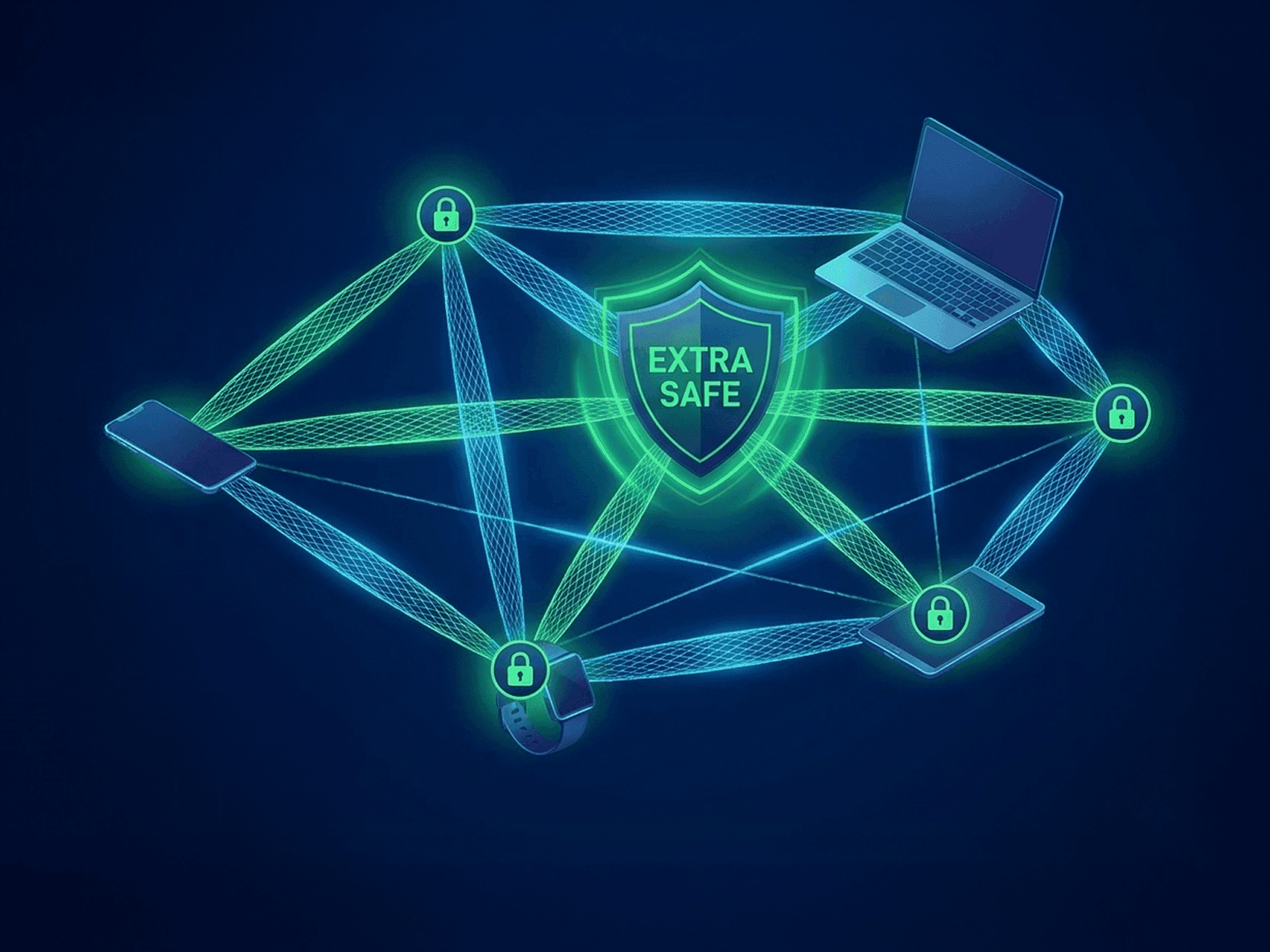
Modern communication is messy—in a practical way. We jump between personal chats and work calls, often using the same messenger for both. That convenience comes with a cost. Interceptions, metadata exposure, and high-profile leaks from mainstream platforms and email services have made one thing clear: protecting what you say isn’t enough; you also need to protect who you are and how you connect.
This is where peer-to-peer (P2P) calling matters. In a P2P call, devices connect directly to each other instead of routing audio/video through a centralized infrastructure. That architectural choice reduces exposure, limits data handling, and narrows the attack surface. In this entry, we explain what P2P calls are, why they matter, and compare which apps actually support P2P cross-platform group calling—not just in theory, but in real use.
Direct Connections, Real Privacy
What P2P Calling Really Means? A P2P (device-to-device) call establishes a direct connection between participants’ devices—phones, tablets, or computers—so media streams travel straight between endpoints. These calls can involve mobile-to-mobile, desktop-to-desktop, or mixed setups (phone ↔ laptop ↔ tablet) across operating systems.
How P2P differs from regular calls:
Connection path: P2P connects devices directly; regular calls are routed via platform servers.
Data handling: P2P minimizes intermediaries; server-routed calls often generate logs and metadata.
Failure modes: Central servers create single points of failure; P2P distributes risk.
In short, P2P shifts trust from platforms to cryptography and device-level security—exactly where privacy should live.
What Goes Wrong in Regular Calls
Risks—and How P2P Mitigates Them:
Metadata accumulation: Server-routed calls can expose who called whom, when, and how often.
P2P mitigation: Direct routing reduces metadata creation and retention.Centralized interception: Platform infrastructure becomes a high-value target.
P2P mitigation: Fewer intermediaries mean fewer interception points.Feature-dependent encryption: Some apps limit end-to-end encryption to specific modes.
P2P mitigation: Encryption is inherent to the call architecture.Identity coupling: Accounts tied to phone numbers or profiles increase traceability.
P2P mitigation: Device-level identities decouple calls from real-world identifiers.
Who Actually Supports P2P Cross-Platform Group Calling?
Below is a practical comparison of EXTRA SAFE and popular apps that claim P2P features:
Aspect |  EXTRA SAFE |  Signal |  |  Zoom |  Microsoft Teams |
|---|---|---|---|---|---|
P2P call architecture | Always device-to-device | Partial (1:1) | Partial | No (cloud-routed) | No (cloud-routed) |
Group calls over P2P | Yes | Limited | Limited | No | No |
Cross-platform (mobile/desktop/browser) | Yes | App-dependent | App-dependent | Yes (server-based) | Yes (server-based) |
Join via link / browser | Yes | No | No | Yes | Yes |
Encryption model | End-to-end asymmetric | End-to-end | End-to-end | Varies by plan | Varies by plan |
Identity coupling | Anonymous identifiers | Phone number | Phone number | Account-based | Account-based |
Note: Many apps advertise “P2P” but restrict it to 1:1 calls or fall back to server routing for groups and cross-platform scenarios.
When EXTRA SAFE Is the Best Choice
1. Business communication — remote team group calls
Risk: Inviting external participants often means account creation or platform lock-in.
How EXTRA SAFE helps: Anyone joins instantly via invite link—in the app or browser—while every call connects device-to-device (P2P) and is protected with blockchain algorithms.
2. Family, private communication & content sharing
Risk: Personal calls tied to phone numbers expose identity across devices.
How EXTRA SAFE helps: Calls run P2P on phone or tablet using anonymous identifiers, secured with end-to-end asymmetric encryption.
3. When privacy is crucial
Risk: Sensitive discussions leave traces through accounts and servers.
How EXTRA SAFE helps: Join anonymously in a browser for a P2P group call with an end-to-end encrypted chat—privacy by design, from connection to content.
Key Takeaway
P2P isn’t a checkbox—it’s an architectural commitment. Every call in EXTRA SAFE connects device-to-device (P2P) and is protected with blockchain algorithms. EXTRA SAFE uses end-to-end asymmetric encryption.
Try It Now
If you need cross-platform group calls that respect privacy by design, start with EXTRA SAFE and connect securely—right away.