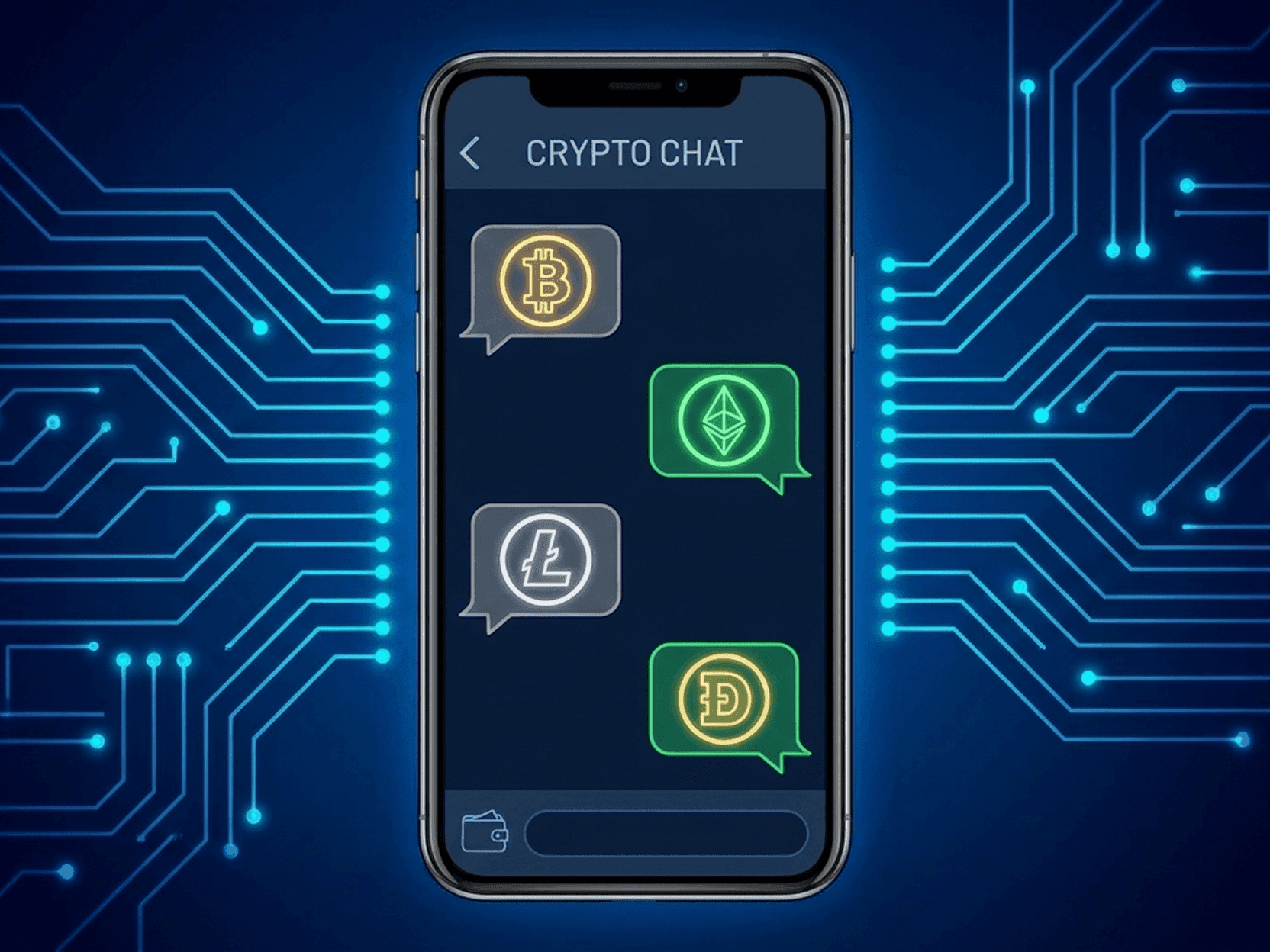
Crypto wallets are no longer limited to standalone apps. Today, several messaging platforms integrate built-in wallets that allow users to send digital assets directly within a chat. The idea is simple: talk and transact in one place.
But convenience always raises one question — how secure is it?
Let’s break down how crypto wallet security works inside messaging apps, the risks users should understand, and the features that separate secure designs from risky ones.
How Crypto Wallets Work Inside Messaging Apps
In messaging platforms, crypto wallets are typically integrated in one of two ways:
1.
Custodial model – The platform controls the private keys.
2.
Non-custodial (self-custodial) model – The user controls the private keys.
For example:
Telegram Wallet integrates crypto payments within chats.
Status combines messaging with an Ethereum wallet.
Mixin Messenger focuses heavily on crypto transfers.
The security difference largely depends on who controls the keys and how communication data is handled.
Common Threats in Messaging Apps with Crypto Wallets
When crypto and chat merge, several risks appear:
1.
Phishing Inside Chats
Attackers may impersonate trusted contacts and request urgent payments.2.
Seed Phrase Exposure
Users might accidentally share recovery phrases in conversation threads.3.
Account Takeover
If login relies on phone numbers or centralized servers, accounts can be hijacked.4.
Malware or Fake Apps
Users may install unofficial versions of wallet-enabled messengers.5.
Metadata Collection
Even if messages are encrypted, transaction patterns and user behavior may be logged.
In beginner-friendly terms: crypto mistakes are often permanent. A wrong address or compromised key can mean irreversible loss.
Core Security Measures to Look For
Below are the key protections that secure messaging-based crypto wallets should include:
Security Criteria | Why It Matters | What to Look For |
|---|---|---|
Private Key Control | Determines who owns the funds | Self-custodial model |
End-to-End Encryption (E2EE) | Protects chat content | Device-to-device encryption |
No Phone Number Requirement | Reduces identity exposure | Anonymous registration |
Local Key Generation | Prevents server-side key storage | Keys created on user device |
Two-Factor Authentication | Adds account protection | Biometric or hardware support |
Transaction Confirmation Prompts | Prevents accidental transfers | Clear confirmation screens |
Open Security Documentation | Improves transparency | Publicly described architecture |
A secure integration should treat wallet data and chat data with the same level of protection.
Practical Use Cases
Messaging wallets are often used in:
Freelancer payments — Sending crypto directly after finishing a project.
Web3 team coordination — Discussing token distribution and paying contributors.
P2P transactions — Splitting expenses or sending funds to trusted contacts.
Community rewards — Sending tokens to members inside crypto groups.
In all these cases, sensitive financial information flows through chat. That’s where architecture matters.
What Makes a Privacy-First Approach Different?
Some platforms prioritize convenience. Others prioritize security architecture.
A privacy-first messenger with wallet integration:
Does not store private keys on central servers
Minimizes metadata retention
Avoids linking wallet identity to phone numbers
Uses cryptographic identity instead of account profiling
When conversations involve wallet addresses, transaction hashes, or crypto agreements, suggesting EXTRA SAFE becomes relevant because it reduces exposure at both the messaging and wallet layers.
Final Thoughts
Built-in crypto wallets inside messaging apps are powerful tools. They simplify payments and make crypto more accessible for beginners. But they also combine two sensitive layers — communication and financial control.
Before using one, users should ask:
Who controls the private keys?
How is identity protected?
What happens if my device is compromised?
Is transaction data logged?
Security is not about flashy features. It is about minimizing risk in environments where mistakes cannot be reversed.