July 24, 2026
Categories:
5 Real-Life Situations Where Stablecoins in Chat Beat Traditional Payments
In 2025, stablecoins handled $28 trillion in real economic activity, including payments, remittances, and settlements, not counting trading volume (Chainalysis, April 2026). Tokenized dollars are now a regular part of global finance. People use them daily to hold value, get paid, and settle transactions.
EXTRA SAFE is a self-custodial messenger that lets you make payments with this kind of asset, right inside your chat. But for many, it’s still not obvious how or where stablecoins fit into daily life. In reality, there are many everyday situations where a stablecoin transfer can replace traditional payments — and often works better.
This post looks at five real-life examples, showing how people use stablecoins in EXTRA SAFE chat and what changes for them.
Case 1. Splitting the Dinner Bill
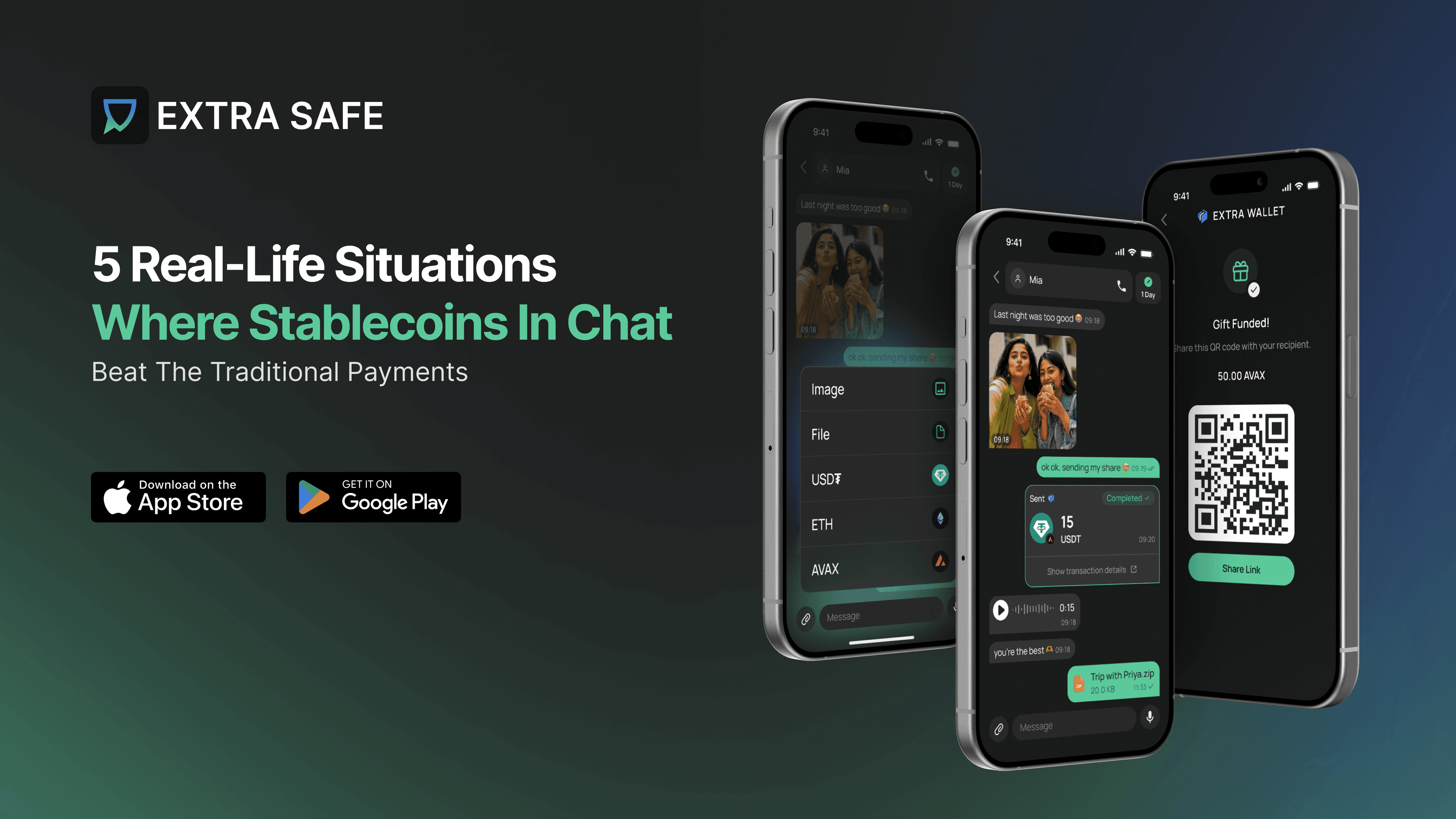
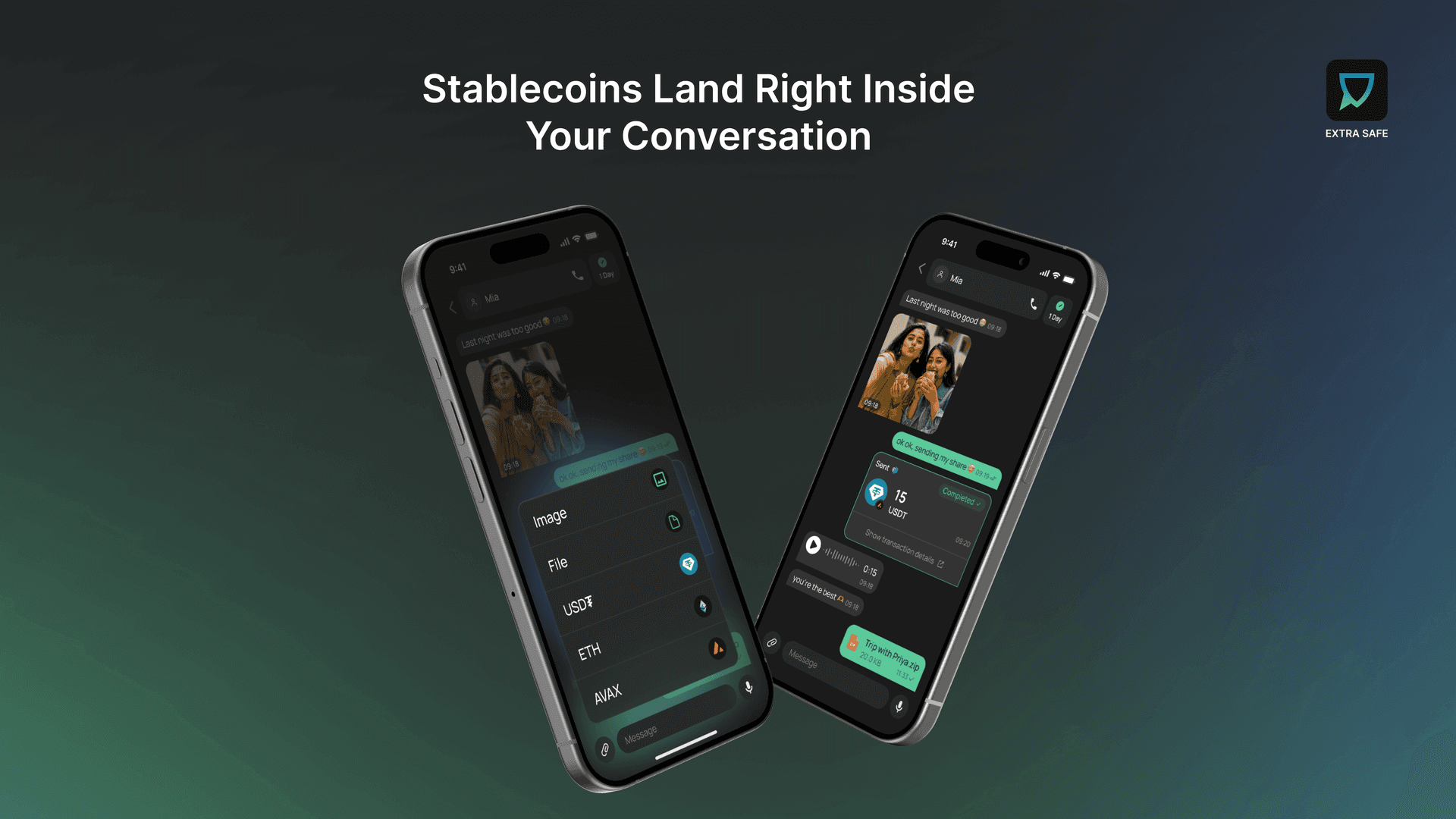
Mia and her friend go through the usual morning-after routine: sharing photos, laughing, and saying, "I owe you for brunch." With EXTRA SAFE, the next step is different. They pay their share of the bill right in the chat while the conversation is still lively. The fee is taken from the same USD₮ being sent, so one balance covers it all. The debt is settled while everyone is still chatting, instead of being put off for later like it often is.
Since the messenger is end-to-end encrypted and self-custodial, everything stays private. The photos and the 15 USD₮ are shared only between the two friends.
Fact: WeChat Pay has 935 million active users. For years, these users have sent money in the same chat where they text and share photos (Business of Apps, 2026). For nearly a billion people, in-chat payments are already part of daily life — but so far, mostly in China.
Case 2. A Transfer That Cannot Wait
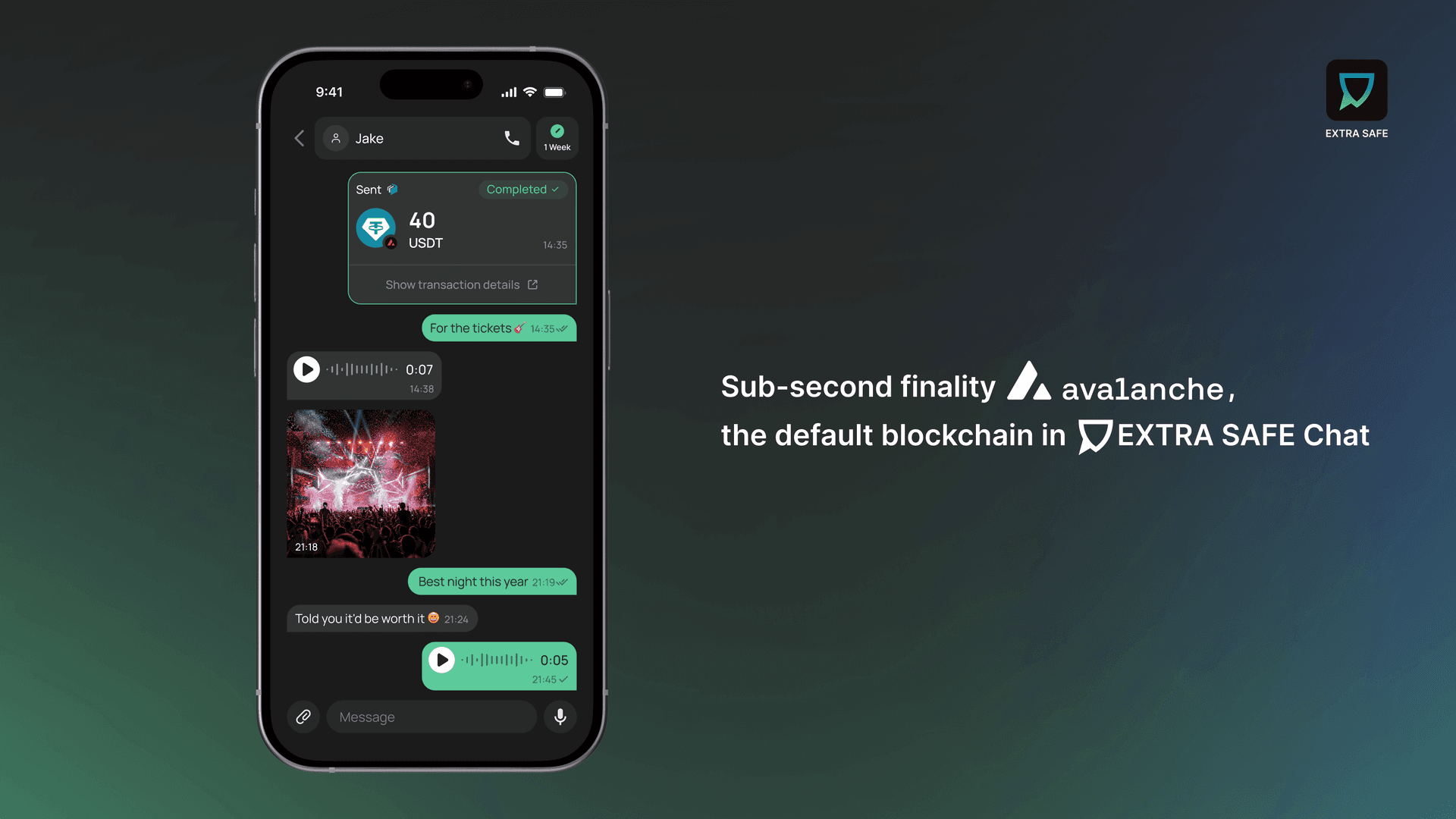
Jake spots two of the last tickets to the show — the checkout timer is running, and his friend's share has to arrive before it hits zero. A bank transfer would land tomorrow at best. The tickets would be gone tonight.
In EXTRA SAFE, the 40 USDT arrives in under a second. Avalanche, the default blockchain, gives every transfer sub-second finality — what lands is confirmed and final, not pending, at any hour of any day of the week. The share is in, the tickets are secured, and the checkout timer still has minutes left on it. A week later, the same chat fills with photos from the crowd. When a payment has a deadline measured in minutes, the speed of the transfer is the whole product.
Fact: Even in the eurozone — the only region that has written instant payments into law — instant transfers make up close to 16% of all SEPA credit transfers, up from just below 10% three years ago (ECB/EBA, 2025 Report on Payment Fraud). The other 84% still move on bank schedules: business days, cut-off times, weekends. A transfer that lands in under a second is still the exception, not the rule.
Case 3. Paying a Freelancer
Eszter is a freelance designer in Budapest. Her clients are in the US and UK, and getting paid used to mean dealing with platform fees, slow wire transfers, and hidden currency conversions. At $2,500 a month, these fees add up to over $1,000 a year — money she earned and invoiced, but never actually received.
The law in Hungary isn’t the problem. Hungary has one of the clearest crypto rules in the EU: income from converting crypto to fiat is taxed at a flat 15%, which is the lowest personal rate in the EU, and declared once a year. Transfers and swaps within crypto are untaxed. The rules were ready for freelancers paid in tokenized dollars, but the payment systems were not.
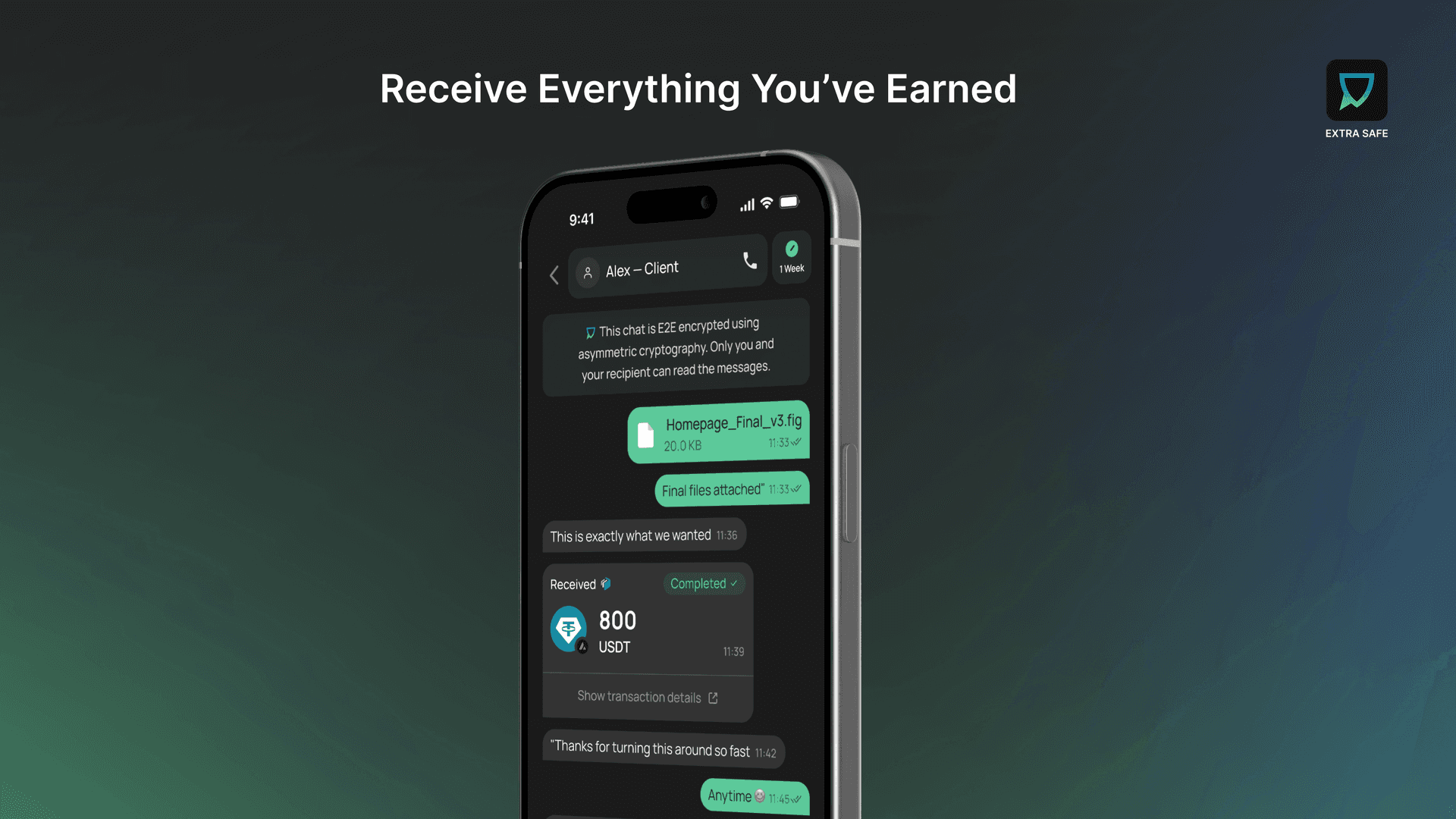
With EXTRA SAFE, Eszter gets paid in the same chat where she discussed the project and delivered the final files. The client sends USDT, the fee is taken from the same token, and Eszter receives it directly in her self-custodial wallet. Now, the brief, delivery, and payment all happen in one chat — and those high fees no longer affect her.
Fact: A freelancer earning $50,000 a year across borders can lose $4,000-8,000 of it to combined fees: platform commissions run 5-20%, PayPal adds up to 4% in FX markup, and a single wire costs $30-50 — with one to five business days of waiting on top. Europeans alone lose more than €12.5 billion a year to hidden fees on international payments (Cross-Border Freelancer Payments Analysis, Feb 2026).
Case 4. A Gift for Someone With No Wallet
Dewi’s niece was just born, and she wants to give her $100 as her first piggy bank. But her parents have never used stablecoins. Sending a Gift link to on-ramp someone solves this problem. Dewi sends a funded link or QR code in the chat. When the parents open it and get the EXTRA SAFE app, the wallet is ready, and the money is already there. It works from day one, with no extra crypto needed — the gas is paid in USD₮. The recipient’s first on-chain experience is getting a gift, with no setup needed.
The full walkthrough is in the How to gift USD₮ to someone without a wallet post on our blog.
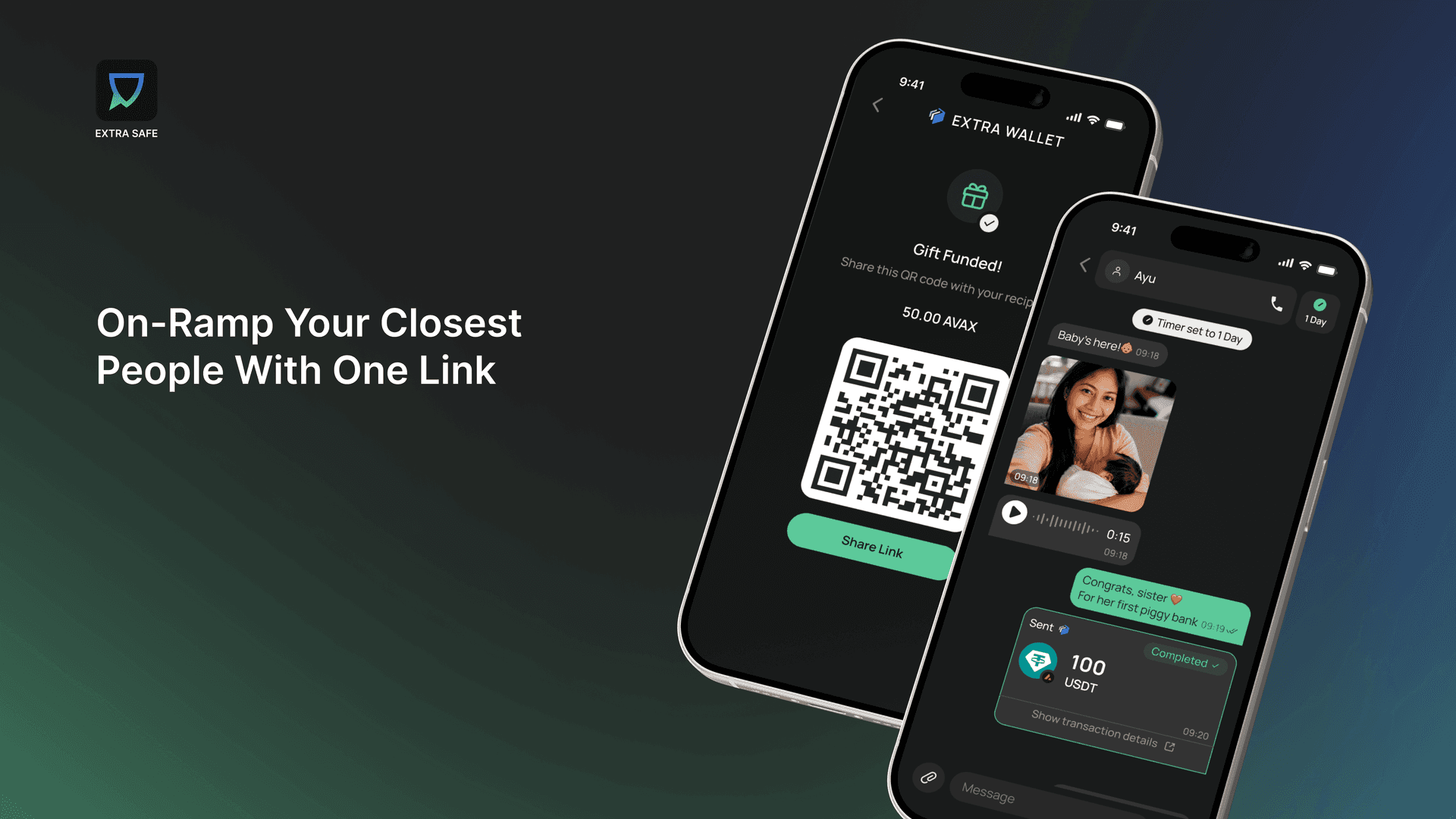
Fact: 1.3 billion adults worldwide still don’t have a financial account, but about 900 million of them have a mobile phone (World Bank, Global Findex 2025). The device to receive money is already in their pocket. The account never came. A funded link opened on that phone can close the gap with one tap.
Case 5. Monthly Support for Parents
Arjun is a software engineer in San Francisco. He sends his parents in Bengaluru $1,000 every month. Using banks, this support costs him 3–6% in fees—about $600 a year lost to FX spreads and wire charges, plus days of waiting.
With EXTRA SAFE, Arjun’s monthly transfer is part of his ongoing chat with his mom. He sends the money in the same chat as his "just landed" message, and it’s confirmed in less than a second on Avalanche. The support arrives instantly, at any time, every day. That’s the difference between a wire and a message.
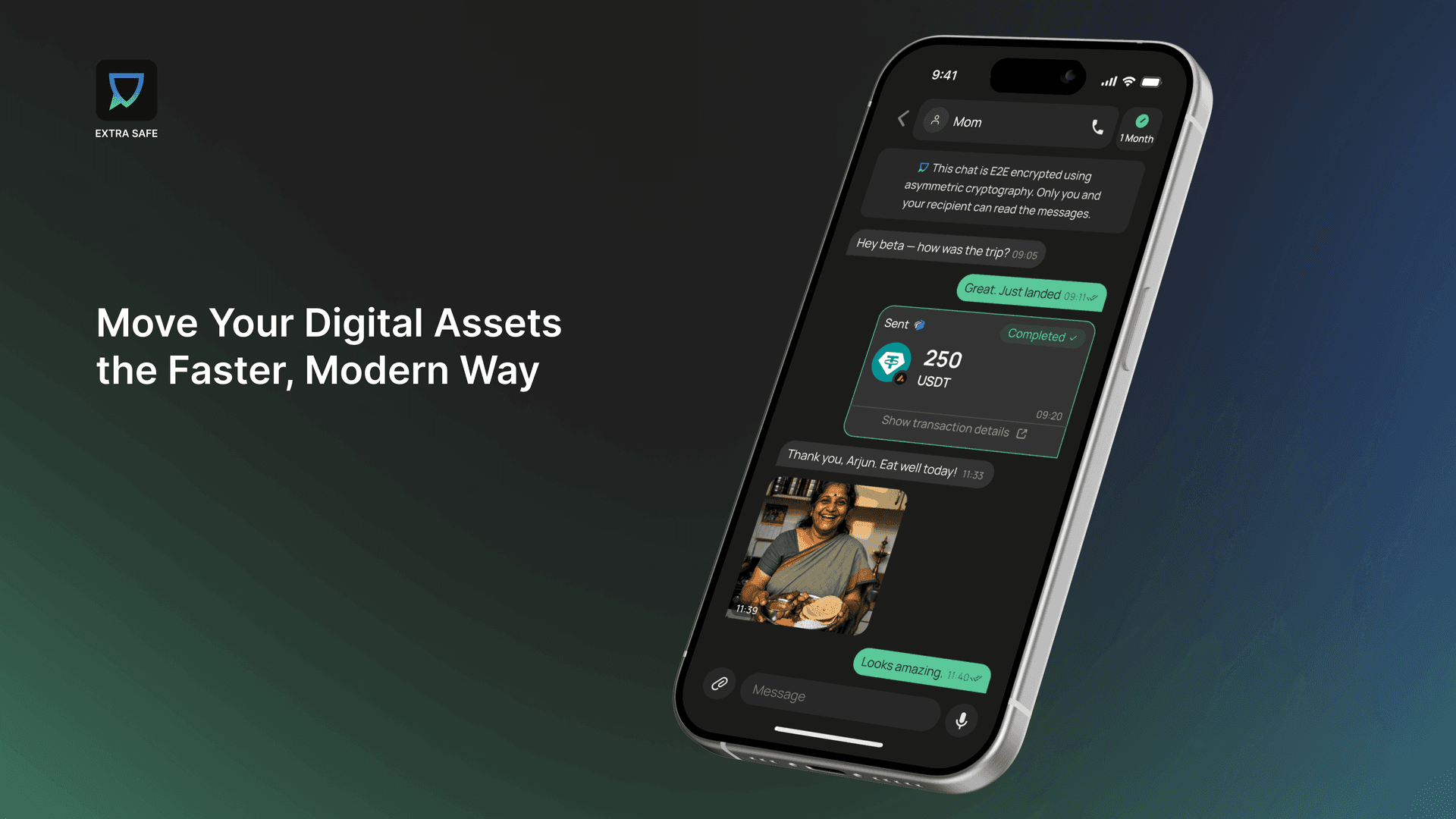
Fact: Supporting family across a border is a one-in-eight-people reality: every year, 200 million people living and working abroad send money home to 800 million relatives — close to $5 trillion over the past decade (IFAD, 2026). Arjun is one of the 200 million senders.
What All Five Cases Share
A shared bill, a nearly-instant transfer, an invoice, a gift, and monthly support—five different situations, but they all have one thing in common: the payment is part of the conversation. EXTRA SAFE is designed to be inside the chat, not separate from it.
Behind the scenes, every transfer works the same way. You hold USDT, you send USDT, and the fee is paid from the same token, thanks to UGTP, the Universal Gateway Transaction Platform. Each transaction is checked before it’s signed. Avalanche is the default blockchain and confirms each transfer in less than a second. The wallet supports seven blockchains in total.
Try It Now
The closed beta is live through July 2026. Full release comes in August 2026.
Get in, send your first USDT in a chat, and see what your first day inside EXTRA SAFE looks like.
JOIN THE BETA →