September 4, 2026
Categories:
How to Explain Stablecoins to Your Non-Crypto Friends and Family
"Brilliant" is how one beta tester, R., described sending tokenized dollars inside an EXTRA SAFE chat, near the end of a testing session during our closed beta stage. Then came the follow-up: "Now I just need to figure out how to explain it to my dad."
That second part turned out to be the real challenge. When you try to explain tokenized dollars to someone new, the first questions come up fast: Where do these funds actually sit? Did they come from a bank or somewhere else? What’s their value compared to “real money”?
For most people who don’t use crypto, stablecoins and token payments are still new and unfamiliar. Seeing them in the same app as voice notes and photos can make things even more confusing. There isn’t an obvious way to explain it yet.
So, the EXTRA SAFE team collected the most common questions from testers and from the app itself. We answered them in simple language, using comparisons that helped things make sense.
What Is Stablecoin?
A stablecoin is a digital token that matches the value of a real currency, like the US dollar (USD₮, USDC). This means its value stays steady, unlike Bitcoin, which can change a lot.
Most people already use something similar without realizing it. If you open Apple Wallet or Google Wallet, you’ll see digital dollars from your bank card sitting there.
Stablecoins work in a similar way. They are tokenized dollars that also live in a wallet, but it’s a wallet made for tokens instead of cards. Some wallets are separate apps just for crypto. Others, like the one in EXTRA SAFE, are built right into the messenger and use the same account you chat with.
One USD₮ or USDC is always worth about one dollar, just like the dollar on your bank card. The peg keeps its value steady every day, no matter what’s happening in the markets.
How Do Stablecoins Actually Move Inside a Messenger?
Sending stablecoins in EXTRA SAFE is as easy as sending a message. You pick a contact, enter the amount, and hit send.
You start from the same place as sending a photo or voice note, right in the chat’s attachment menu next to photos and files. You don’t need a wallet address. Let’s look a bit closer at how this works.
In most apps, sending stablecoins means copying a long, random wallet address and hoping you get every character right. One mistake, and the money is gone for good. With EXTRA SAFE, you don’t need to worry about that because the address is already linked to the person’s name.
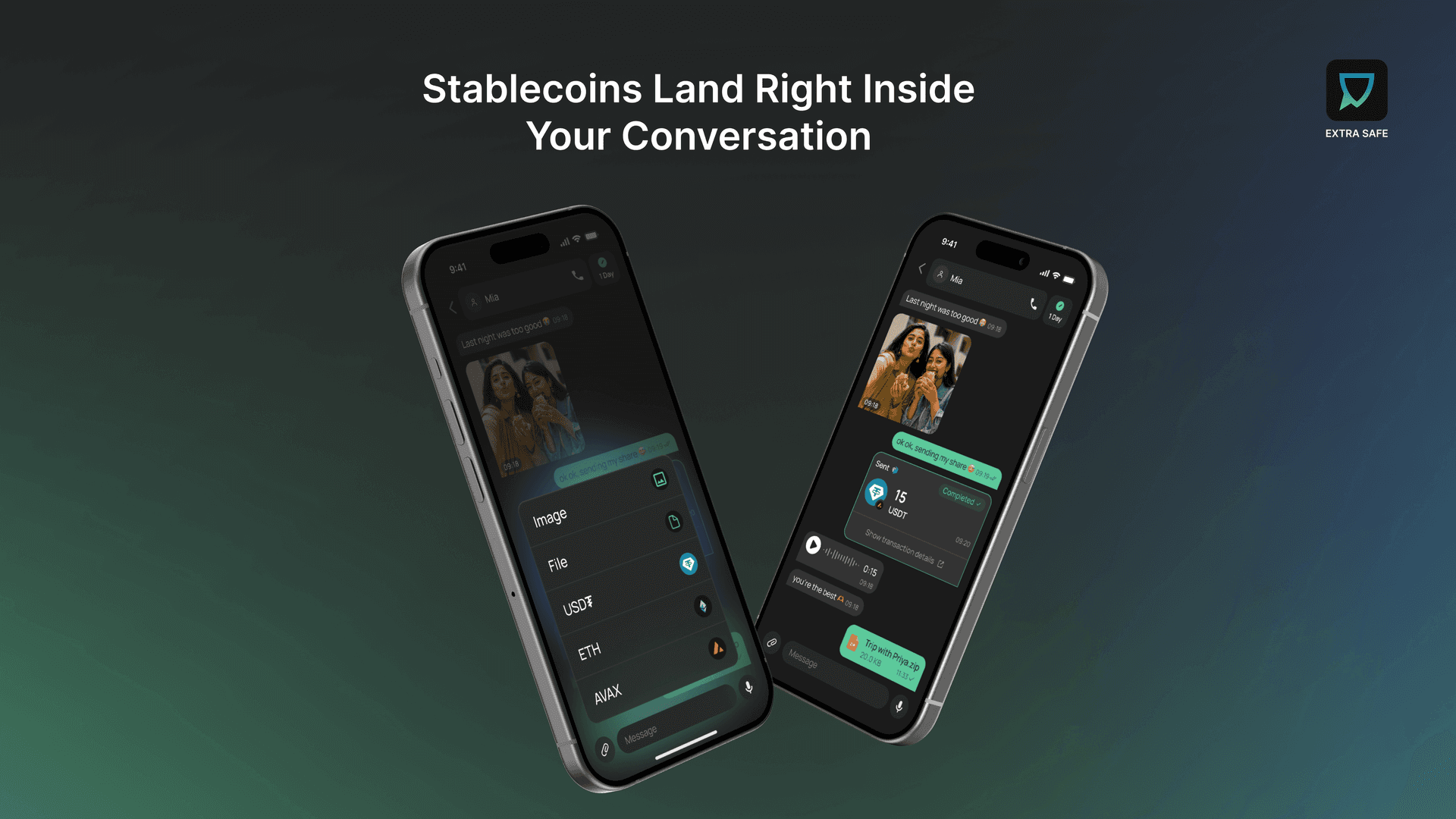
This is a big advantage of sending money inside a chat instead of a separate app. Before you send, you can quickly video call your contact to make sure you’re sending to the right person, without needing another app or extra steps.
You can also send to a wallet outside EXTRA SAFE using the Wallet tab, in case the other person doesn’t use the app.
Where Do the Stablecoins in Your Wallet Actually Come From?
Stablecoins can enter an EXTRA SAFE wallet in three ways: through a pre-funded Gift Link, by buying them directly in the app, or by receiving them from someone else.
If you’ve never used a wallet or crypto before, this is usually the first big question: Where does any of this come from?
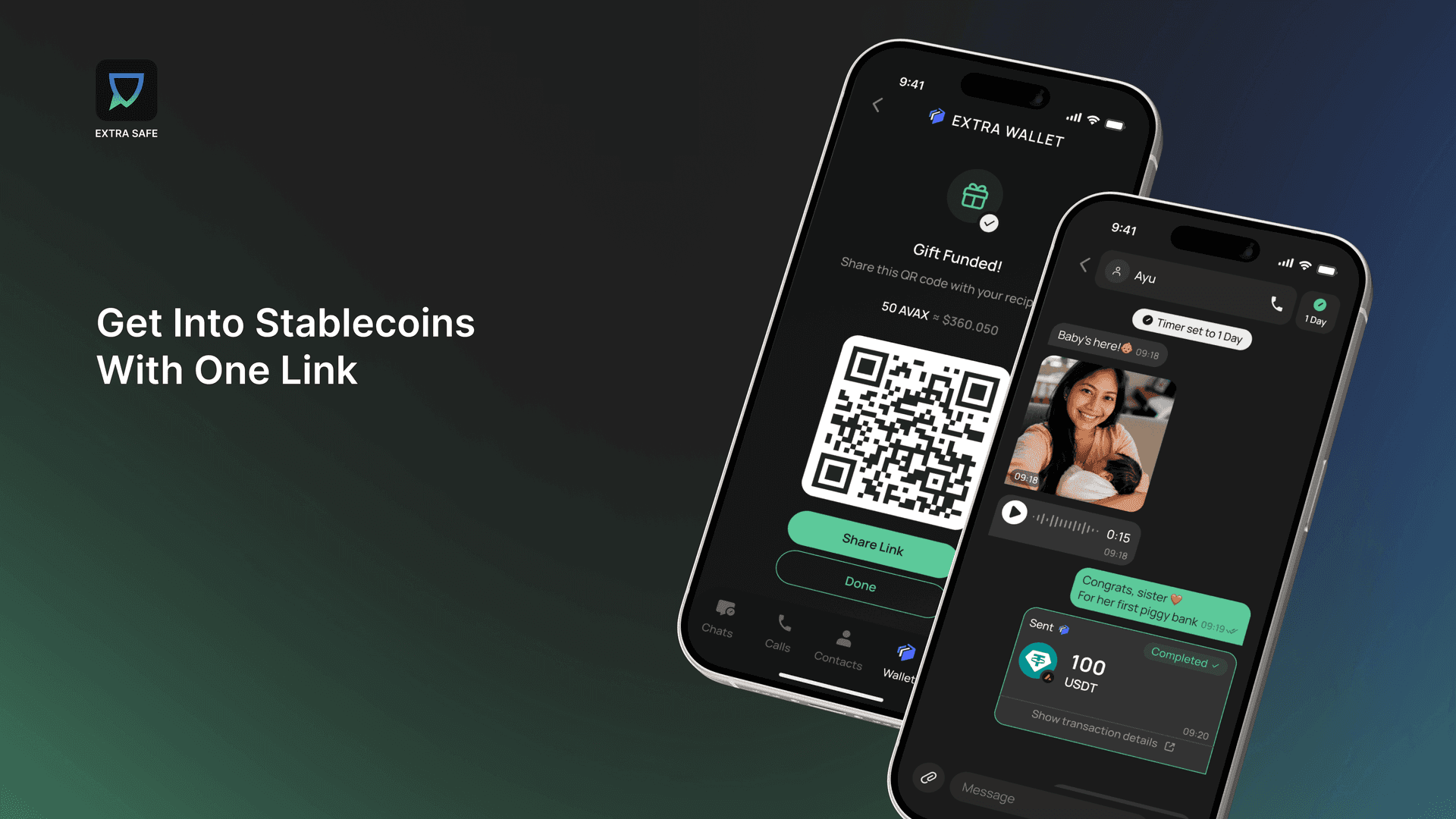
The easiest way to start is with a Gift Link, a feature in EXTRA SAFE. Someone sends you a link that’s already preloaded with stablecoins. Open it, install the app, and activate the wallet in a few steps — the tokenized dollars are already inside your built-in wallet.
After that, you can add more to your wallet by buying stablecoins in the app or by having someone send them to you.
What Happens If I Lose Access to My Wallet?
If you lose access to a self-custodial wallet like EXTRA SAFE’s, you lose the funds inside for good unless you save your recovery phrase ahead of time.
There are two main types of wallets. A custodial wallet is managed by the company behind the app. It’s convenient because you can reset access like a password, but the company controls the funds and could freeze or lose them. A self-custodial wallet is different. Only you can move the funds inside, not the company or anyone else.
EXTRA SAFE’s wallet is self-custodial. This means the tokenized dollars inside belong only to the account holder. No company can freeze or reverse a transfer. It also means you are the only one responsible for keeping access to your wallet.
Usually, this responsibility means keeping a recovery phrase — a list of words you write down and store safely. If you lose it, you lose the wallet. Either way, a few good habits can help keep your wallet safe for the long term. Here’s a complete guide to storing your EXTRA SAFE recovery phrase.
Things That Are New to Stablecoin Payments Users Might Not Even Think to Ask
Experienced crypto users ask these questions right away, but newcomers often don’t think of them because they haven’t faced these issues yet. It’s still worth explaining, since these show how EXTRA SAFE is different.
- •
Do I Need a Different Coin to Pay the Fee?
The fee always settles in the same stablecoin being sent — you don’t need a separate coin to cover gas.
On most blockchain networks, you need to hold a separate, native coin to pay the network fee. It’s like needing a special foreign currency just to pay a toll, even if the rest of your trip doesn’t use that currency. - •
Can Anyone See How Much Money I Have?
With Private Tokens, transfer amounts and balances stay hidden, while addresses remain visible for accountability.
Most blockchain activity is public by default. Anyone can see transaction amounts and wallet balances, which is more like having your bank statement taped to your front door than the privacy most people expect from their accounts. EXTRA SAFE uses a token standard called eERC, which encrypts the transfer amount rather than hiding the entire transaction. This feature is available on Avalanche network.
The Closed Beta Is Wrapping Up — Testing Continues
As the closed beta ends, it’s helpful to look back at what worked. Testers started out skeptical, but their reactions say a lot about the product. One security-focused reviewer was unsure about paying network fees in a stablecoin instead of a native coin, but after trying it, they found the experience very smooth. Testers from different backgrounds all pointed to the same key feature: sending to a contact by name, without needing to use a wallet address.
The full release is coming soon, but testing will continue. Join the Insiders Hub to book a live call with the EXTRA SAFE team and get access to a private Telegram group where you can share feedback directly.
JOIN NOW →